All posts by Becky Hill

I love life. Life is full of wonder, excitement and challenge. Sometimes life is amazing but it's not always easy and not always fun. However, life is always an adventure, a precious divine gift. I journey through life with my husband, 2 daughters and many other friends and family. Learning, growing, leading, listening, inspiring, writing, creating, asking questions and helping others to grow. So that together we can discover what life is all about! In January 2015 I fell from a ladder and have since suffered with daily debilitating neurological symptoms and unbearable daily pain due to a spinal CSF leak (seen on MRI summer of 2019 and in hindsight). Following another very bad relapse of symptoms in the Summer of 2020 I was subsequently diagnosed with chronic arachnoiditis. I have since learned that the arachnoiditis can be seen on my first MRI's in March 2015 so I have always had it and it seems to be mildly adhesive. Both conditions may have been caused by the trauma of the fall and the multiple bone spurs I have in my thoracic spine pressing into the dura. I continue my journey with the support of two UK Midlands NHS hospitals & Neuro teams who have both diagnosed the leak and arachnoiditis and are both supporting me to try and find more long term healing and management of these awful, often very misunderstood medical conditions. I currently also serve in pastoral ministry and church web administration alongside my husband Matt Hill who is an ordained Pastor at Life Church, Leicester, UK. www.lifechurch.co.uk Email me at beckyhillblog@outlook.com or follow me @beckyhill3 on Twitter or YouTube at Becky Hill https://www.youtube.com/channel/UC9ZkCy9B_IpeaGrXd0CEgow Here is my new summary video of my whole medical journey as well as footage of my January/ February 2021 adhesive arachnoiditis relapse/ flare and treatment with IV Steroids. https://youtu.be/cKECz_fCnFw To see my daily video diaries from this time please see my YouTube channel.

Finding Peace In The Midst Of The Storm 

“Peace does not mean to be in a place where there is no noise, trouble or hard work. It means to be in the midst of those things and still be calm in your heart.”Author Unknown 

Do you ever crave true peace? 

We live in a world that competes for our attention. There are so many voices speaking at us and to us. Both from the outside, as well as the thoughts from within.

We often don’t feel peaceful. 

Decisions,
choices,
stress,
trouble
and people …
With all their thoughts, needs and opinions;
battling for our attention. 

Some days we feel like we are drowning in noise. 

Even in the silence. 

It is actually often in silence that our own thoughts become louder. All the different opinions, perspective and voices from ourself and others fly around in our heads, as we attempt to work out how to live this life as best we can.

It’s stressful.
We long for peace.
We search for it everywhere:

Perhaps a holiday will help.
Maybe TV will block it out.
Perhaps having a few drinks might drown the noise.
Maybe that bar of chocolate.
The perfect partner.
A night out. 

…Will distract and cover over all the noise, insecurity and stress that we feel in the hidden depths of our hearts and minds.

But when those moments of distraction have passed – the noise is still there.  Earlier I typed in ‘peace’ and ‘inner peace‘ into Google. This is what it found:

“Inner peace (or peace of mind) refers to a state of being mentally and spiritually at peace, with enough knowledge and understanding to keep oneself strong in the face of discord or stress. Being “at peace” is considered by many to be healthy and the opposite of being stressed or anxious.” – Wikipedia 

I love this definition and can totally relate to it. I have felt it, it is there in my heart. It is what gives me strength in hard times.

But some days I still have to seek it, find it and receive it. 

Peace is always there, but it sometimes gets hidden by all the other noise. Or we can get distracted from it, by the force of the storm around us.

I am in a storm right now that won’t go away. Whatever we do it won’t seem to budge. I have a spinal/ brain condition, from an injury, which means I have to lie down flat all day (apart from using the bathroom etc). Otherwise I feel exceptionally unwell.

Sometimes things go wrong in our lives. Regardless of how positive you are. How much you fight it. How much you pray. How much faith you have.

Bad things still happen. 

Sometimes we are responsible or someone else played their part. Sometimes it’s the combination of a crazy set of random circumstances. Sometimes it is a mix of the two.

But tough things do happen. Storms will come that won’t seem to budge.

And all we can do is survive them. 

But is that all we can do? 

Maybe we can do more than that. Perhaps we can thrive in the midst of them. Letting the storm rage around us, while we just bask in the peace within us.

Is that really possible? 
This is the place I have reached again in the last few days. To a new depth. 

The peace has always been there over the past 9 months. In fact, neither my husband or I expected or really worried that my injury would cause major health issues for this long.

Over the years, we have learnt to look at everything positively and with faith. I never even begun to imagine that all this could happen after ‘that fall’.

But it has. 

When I was first told I had a concussion – I dismissed it, in part, thinking ‘well it can’t be that bad’ I am sure I will be OK in a few days.

You see I am used to ‘bouncing back’ I have never really been ‘ill’ for more than the occasional few days. I am normally a very healthy person.

When they then told me I had Post-Concussion Syndrome‘ and I would probably be out of action for 8 weeks. I honestly thought – nah not me – give it 4 weeks tops.

When I was then diagnosed with a CSF leak after 9 weeks, I thought OK one epidural blood patch will do me and I will bounce back – no worries – and all this will be over. 

When it didn’t ALL go away after my first blood patch, I believed it’s perhaps just going to take a bit of time – I’m going to be 100% better soon. 

When five months later things started getting worse again, I thought, this is just a blip I’ll just take it easy for a bit and then I’ll be back.

When I completely relapsed and ended up back in hospital – I thought, I will be OK, they will give me another blood patch, I’ll be sorted and it’s all going to go away.

But that was nearly 4 weeks ago and there seems to be every barrier being thrown up to stop this blood patch from happening.

My condition is apparently complex. 

I have learnt that sometimes storms linger for a while. 

Whatever we do,
Whatever we say,
Whatever we pray,
Whatever we believe,
the storm lingers.

What do we do when nothing is working? When we are tired and weary? When we don’t know what to do anymore and there seems no way forward? 

There are two things we can do.

  1. We give up, allow ourselves to sink into self pity and be carried away by what is happening. Letting it begin a process that will consume and destroy us, our relationships, and our mental and spiritual health.
  2. We choose to dig deep and seek out the inner peace that is available in the midst of the storm, and keep on moving forward in faith.

Number one is not an option for me. I will NOT allow what is happening around me and to me to steal my inner peace and wreck my relationships. I won’t let it dictate how I should behave.

Because when there is nothing left, I still have God. Even when things are tough, I still have faith. Even if the wait goes on, I still have trust.

When the storm rages I can have a peace that passes all understanding. AND I KNOW, THAT I KNOW, my relationship with Jesus will sustain me through all the trials and all suffering.

If my faith in God and the peace I have only remains firm in the good times, then my faith is very shallow.

But when I can say:

I DON’T UNDERSTAND THIS.
The way forward is not clear.
It is really hard.
I feel stretched and challenged everyday.
I have moments where I want to give up, crumple in a heap and get angry at everyone.
Moments that I break down because it’s too tough, I am again in pain and there is no end in sight. 

However, despite it all… 

MY GOD IS ALWAYS GOOD AND ALWAYS FAITHFUL.

That is when I know that my faith is secure. That is the moment that I know that I have peace because Jesus is with me every step of the way.

Like a small child whose anxiety and fear goes away because their parent is by their side. I have a Father in heaven who walks beside me saying “You are going to be OK because I am with you – ALWAYS. I will love you through this and cover you with my grace and strength.”

I no longer need to understand it all. I just have to trust in Him.

That is the inner peace that passes all understanding. That is how we can rest in the storm. In a place that discouragement, worry, anger, bitterness and blame can no longer eat away at us.

The storm then looses it’s power over us and we begin to thrive in it’s midst. Growing stronger, getting wiser and taking hold of that all consuming peace that never lets us down and empowers us to keep pressing on regardless. There is always peace hidden in the storm but you have to learn how to seek and find it. 

You have to learn how to seek and find HIM. 

“… God’s peace … exceeds anything we can understand.” –Philippians‬ ‭4:7‬ ‭The Bible

How do you find peace in the midst of the storm? 


To read more about my ongoing story of living with a chronic spinal CSF Leak click here.

Here is a brilliant 2 min animation about Spinal CSF leaks.

For more information about spinal CSF leaks please see the UK charity website at www.csfleak.info or the US charity website at www.spinalcsfleak.org.

The Beauty Revealed Through Brokenness

There are seasons that come in our lives that challenge us to the core of who we are. Times when, for all sorts of reasons, it feels like a light is being shone into the depth of our hearts, revealing the extent of our human frailty and weakness.

We can feel exposed and vulnerable. 

Our confidence is slowly chipped away, as our lives feel like they are being rigorously pruned. We can see all the branches being chopped off and lying on the ground around us.

It’s hard. 

There are moments when we feel so exposed that we wonder how much more we can take. 

The thing is, pruning is not a bad thing. Any gardener knows that you have to prune a bush for it to be healthy and grow better. Sometimes the pruning process leaves the plant looking bare and weak. But we know that actually it is making the plant stronger.

Following my relapse 3 weeks ago I have had to wait a lot. In fact, I am still waiting for treatment (an Epidural Blood Patch) for a recurring CSF leak, which keeps being delayed due to logistical problems in arranging this at our local hospital.

The longer the wait, the more you feel challenged. Patience gets harder over time, especially when you are unwell. Our patience can be short lived and we soon find ourselves in a place where endurance has to take over.

It takes a lot of strength and courage to stay positive during challenging times, particularly when they stretch out and do not appear to be resolving. 

When you know exactly how long you have to wait, you may find it hard, but you know you only have to keep going for a time. When the waiting becomes open ended, it gets a lot harder to maintain a good perspective.

Each new day requires new perseverance: your frustrations grow, negative thoughts and attitudes increasingly knock at your mind – coaxing you to let them in.

In these times perspective matters a lot. We have to see the bigger picture or we will become consumed by the daily challenges.

Something that has helped my perspective recently, is seeing my own journey in the light of the process an artist used to sculpt a work of art.  

A lump of stone or wood has to be crafted. It is the artist’s canvas. He carves into it and shapes the strong and solid material.

He strips back the strong material to reveal its hidden beauty. A design so intricate and detailed that it will draw people to its workmanship. It will speak and connect to people far more than the original block it was carved from.

The sculpture is a message or a gift given to the world by the artist who created it.

The artist reveals the true beauty hidden within the strength of the solid block of stone or wood. It always existed but it had to be foreseen before it could be revealed. 

The block first has to be broken and shaped to reveal the creator’s vision. 

This is the process I choose to believe is taking place in my life at the moment. I believe my injury was an unfortunate accident, but I know it is and will be used for good. 

It is painful but it is not without purpose. 

When your health is challenged over a long period of time, you inevitably feel weak. But the weakness isn’t only physical. It effects everything. It challenges you mentally, psychologically and spiritually.

You can feel stretched beyond what you have ever known. 

You don’t understand it and can’t seem to fully break free from it.

It’s easy to give in to the flood of self pity. Refusing it is hard. You have to learn how to fight and stand your ground from a place of peace and rest. You have to fill your mind with better things and feed on truth that strengthens you.

It is not easy.  

But! 

If we can embrace the journey of brokenness we actually become stronger. The process can shape us into something more beautiful, if we let it.

As we are stripped back and stretched, our true selves are unveiled.

We won’t always like what we see during that process. 

Our vulnerabilities and insecurities are exposed. We become more aware of our emotions and thoughts – both good and bad. Particularly, when also you have to rest a lot and don’t have a busy life to distract you.

Your thoughts are louder in silence. There is less to distract you. 

If we can learn to see and face these, we become more self aware and can work through them. That is what makes us stronger. That is the beauty of brokenness.

For me it’s an ongoing journey of grace. 

I know I am being stripped back. I know my identity is being challenged daily.

But I choose to embrace this process of brokenness, of being stretched and stripped back, because I know it is breaking through to who I really am and who I am meant to be.

I see that a storm that has tried to destroy me, in various ways, is being turned around into something beautiful. 

I am being crafted and designed into something more meaningful, more unique, with more depth.

My creator is taking my life and using everything that comes into my life – for good. Regardless of whether that thing comes to bless or hurt me – He will use it to make something more beautiful in the end. 

I am not talking about physical beauty. 

I am talking about the inner beauty of purpose and character. The beauty of being broken and yet in the brokenness discovering who you really are.

The beauty that comes when we surrender to the creator who has envisioned and seen our potential since the beginning of time.

The one who takes the same human mould we all have, but each time creates something unique, unlike any other. He can then take our past, present and future and shape it into something of value, something that makes a difference.

The creator didn’t stop creating when we were born. He had only just started.

Brokenness is painful. Being stretched and stripped back hurts. Facing our weakness is humbling.

But I know it is not without purpose. 

I know it will be always be used for good. Even that which attempts to destroy us can be used and crafted into something more beautiful. 

A masterpiece, like no other, that will reflect the awesomeness of the one who created it. A work of art that will always have purpose and value.

Even in times of pain. 

“For you created my inmost being; you knit me together in my mother’s womb. I praise you because I am fearfully and wonderfully made; your works are wonderful, I know that full well… How precious to me are your thoughts, God! How vast is the sum of them!” ‭‭- Psalm‬ ‭139:13-17‬ ‭(The Bible)

For we are God’s masterpiece. He has created us anew in Christ Jesus, so we can do the good things he planned for us long ago. -Ephesians 2:10 (The Bible)

To read more about my ongoing story of living with a chronic spinal CSF Leak click here.

Here is a brilliant 2 min animation about Spinal CSF leaks.

For more information about spinal CSF leaks please see the UK charity website at www.csfleak.info or the US charity website at www.spinalcsfleak.org.

Nine Months On: My Ongoing Journey Of Overcoming A Spinal CSF Leak. 

“Courage isn’t having strength to go on, it’s going on when you don’t have strength.” – Napoleon Bonaparte

Each of us has a story. Our life stories are unique to us. Lives, circumstances and even illness and injury are not often ‘text book’. 

We are all individuals and our lives and bodies are complex. 

I want to continue to share my own story, in the hope it might help you on your journey and also hopefully educate people about some of the complexities of these conditions.

I have chosen to write the post specifically with CSF leak and post concussion sufferers in mind. Which is why it is longer than my normal posts.

Over the months I have read about other peoples stories.

Some of them tie into my own experiences. 

Some don’t. 

So I wanted to add my own story to those out there. Maybe you will relate to it. Maybe not. But I hope that it helps you regardless.

“Facing pain may require more courage than we’ve ever had in our lives.” – Samuel Chand

We all have days and times in our lives when we don’t want to get up in the morning. When life is busy, stressful and hard work. Times that you crave to be able to stay in bed all day read a book, watch TV or listen to music.

Then you get ill or injured and, for a time, staying in bed all day becomes your reality.

And it is far from easy. 

If you have seen any of my previous blog posts you will know I fell off a ladder 9 months ago and sustained a concussion (mild traumatic brain injury) and was later diagnosed with post-concussion then 8/9 weeks later, a CSF Leak (Cerebral Spinal Fluid Leak). Which we assume is somewhere in my spine.

At the moment I am lying flat in bed writing this. I have spoken about lying flat in many of my blog posts, but what does this actually mean? 

I mean my upper body and particularly my head has to be flat on the bed or sofa. Sometimes I can use a very thin pillow to support my head. Often even that lifts my head too high, so I tend to spend most of the day, and sleep, without a pillow. I can be on my back, side or even front.

But my head must be as flat as possible

When I was in hospital, both times, It would intrigue me that so many very ill people are propped up in bed with pillows and their beds raised up.

That concept is unthinkable for me at the moment. In fact the reality is that would just be a form of torture. It seems alien to me to be unwell and sitting propped up. 


I have a routine now where I drink lying flat (even cups of tea) using straws. I eat all my meals and snacks (apart from dinner) lying flat. (I just eat dinner extra fast so I can lie down again quickly). 

My first time in hospital the pain had got so unbearable that my husband would feed me dinner, so I could lie flat, because that is the only way I could manage the symptoms and the pain.

Nine months later, following a relapse, I have learnt to manage it a lot better. The main way to do this is just to avoid being upright for more time than absolutely necessary. Five or ten minutes is normally manageable. Beyond that is often unbearable.

You have no choice but to lie down because it reaches the point you literally just can’t function upright. 

So I currently try to only get up when absolutely necessary.

When I lie flat I am almost symptom free. I say almost, because I still can feel weak and dizzy and get some aches and pains. 

But lying flat I generally feel more like me: 
I can write,
I can talk,
I can think.
I feel more normal! 

Sitting or standing at the moment is a whole other issue. You would not believe how you can go from feeling mainly symptom free to feeling really very ill in a matter of minutes or even sometimes seconds of being upright.

Since I was diagnosed with a CSF Leak, I have caused the doctors and Neurologists a lot of confusion because my full set of symptoms are not fully in line with their normal experience of a CSF leak. 

Most doctors experience of CSF leaks are mainly from epidurals that have gone wrong or lumbar punctures (LP’s/ Spinal Taps) where the hole in the spinal dura won’t close. Also people can obviously get cranial/ skull leaks from trauma, which can be seen through spinal fluid dripping out your ear or nose. These can be (but not always) easier to diagnose and often easier to treat.

Spinal leaks, whether spontaneous or through trauma (as in my case), often cannot be easily seen or proven. Which makes diagnosis and treatment problematic.

Mine also seems to be connected to the original post-concussion diagnosis. Which tends to confuse doctors because I often present at A&E with symptoms that are more in line with post-concussion syndrome/ post traumatic migraine.

The telling sign that there is probably a CSF leak, in the mix, is that I have the postural element of the injury. I am generally symptom free lying flat, but symptoms build when upright. If I am upright for too long the symptoms will also extend to lying down for a while after, but they always dramatically improve. 

This has lead the Neurologists to conclude that they think I probably have a CSF leak that exacerbates post-concussion migraine symptoms. I will try and explain this to you further in the hope that it might help other people with similar issues.

A couple of weeks ago I was admitted to hospital following an almost total relapse of symptoms. There are a few things that were slightly better than last time I was admitted 6 months ago, but generally it’s the same thing. I think perhaps part of the difference now is that I know how to manage the injury better than I did before. 

Here were my symptoms I was admitted with (in no particular order). 

Dizziness,
Balance issues,
Walking difficulties,
Speaking difficulties, including slurring of words and inability to fully express myself.
Drunk like behaviour.
Pressure in the head.
Neck stiffness & pain.
Pain at the lower back of my head.
Photophobia (light sensitivity)
Shaking and spasms.

These are actually almost the same symptoms I had every time I visited A&E since my injury (4 in all). The third visit I was in such acute pain in my head/ neck that they tried to give me morphine, which rather than take the pain away, made it worse and made me very sick so they decided to admit me for a brain MRI scan.

It was only through this first admission that I finally got to see a Neurologist who raised the possibility of a CSF leak due to the postural nature of my symptoms.

The consultant looked into two possible diagnoses: Post traumatic migraine from the concussion or a CSF leak.

Neurology then set about to investigate the CSF diagnosis which proved more problematic than we would have hoped.

If you read up on CSF leaks you will soon discover that diagnosis can be immensely difficult.

Unless you have recently had a lumbar puncture/ spinal tap, an epidural or spinal surgery and then present with postural headaches. Proving you have a leak and finding it can be a bit like looking for a needle in a haystack.

They firstly did an MRI brain with contrast which came back clear of Intracranial Hypotension or ‘brain sag/slump’. This is the condition that low CSF causes. Basically, because there is less fluid round your brain, your brain then falls in your skull, due to gravity, when you are upright. The pain and symptoms are due to the pressure this puts on this area of your head and the stretching/ squashing that occurs.

It is not unheard of for these scans to come back clear. And from what I have read, severity of symptoms do not necessarily correspond to these scan results.

So they attempted to find a leak site in my neck via MRI. This also came back normal. Which is again not unusual.

The leaks are often minute. Most imaging, even MRI, is not powerful enough to locate them. 

They then did a lumbar puncture/spinal tap to look at opening pressure. Mine was a 7. They said they would consider it to be low if it was 8 or lower. Worse cases of CSF leak are often a 3 or below. (Normal is about 10-20).

So that supported the diagnosis but it was not a definitive diagnosis. 

When they did the LP I knew it was the same sensation I felt. However, following the LP I had an additional headache which was even worse, again postural, and all my other symptoms increased too:

Head pressure,
Neck pain,
Dizziness,
Instability walking etc.
My back also hurt a lot at the site of the LP. 

These restored back to what they were before the LP a couple of days later.

I then had an MRI of my spine which came back clear. 

The neurologists then decided to try a high volume blind epidural blood patch. Which is used to treat spinal CSF leaks when they can’t locate the leak site.

Usually if you have had an LP or an Epidural they know where the leak is so they can inject the blood patch into the same location in the lower epidural space in the spine. This is supposed to help seal the leak through the blood clotting and generally increase the spinal fluid pressure. These procedures have a high success rate. 

It wasn’t easy for them to agree to get an anaesthetist to do a blind patch at first, because of the higher risks involved and lack of evidence to back up the diagnosis. Blind blood patches are a lot less effective than ones directed at the actual leak location. 

The problem is we think, it is possible, that my leak might be in the upper or even cervical (neck) spine. To do a blood patch higher up the spine is very high risk because of the lack of space between the vertebra to reach the epidural space and because of the proximity to the brain.  

Eventually a team of anaesthetists agreed to do a blind blood patch and they took me down to surgery to do it. I think they managed to inject 30ml of my blood, taken from my arm, into the epidural space in my lower spine. 

The consultant anaesthetist then advised not to do a second blood patch, even if symptoms did not improve. When people have blood patches following an LP or epidural CSF leak, relief can often be quite instant. They will also often do a second or even third blood patch if the first one fails. In my case they were concerned about doing another high volume patch without further investigation. 

I laid flat on my back for about 15 hours after mine, without moving, to help it to ‘take’.

When I was able to get up some things had improved, some things hadn’t. 

I had the choice whether to be discharged or stay at hospital to pursue more investigations and treatment (which was not a simple route). I chose to go home (having been there 18 days) and work on my recovery and hope and trust that things would improve.

And things did improve, a lot.    Within a few days I was back on my feet. I could walk on my own again outside, I could drive short distances. I didn’t have as much problem with head pressure and pain.

But it was still there. 

I always put this down to the fact I had had a brain injury (concussion) prior to this and had been in bed for 3 months.

Surely things would just take time. 

Symptoms improved gradually and I thankfully pretty much got back to normality.

But I still suffered with head pressure, head pain, spaced out symptoms, dizziness, back pain (from the blood patch) and neck pain.

I still found I could not get through a whole day without lying down flat. Life became about pacing myself. Staying positive and believing that things would keep improving. 

Then I relapsed. 

Perhaps I did too much.
Perhaps I took too many risks.
Perhaps it happened regardless of what I did.  

Over the period of about 2/3 weeks things got progressively worse. I had to lie down flat more and more during the day to cope and compensate.

I went back to the GP, got a referral back to Neurology (which I would have to wait for an appointment for). Tried lying down for most of two days to see if that helped.

Then symptoms got overwhelming and we headed back to A&E for the fourth time this year. As I talk about in ‘Learning Patience’. 

The thing that again confused the Neurologists was why did I always present with symptoms more in line with post-concussion syndrome/ post -traumatic migraine BUT the symptoms are obviously very postural.

Why did I not just present with an unbearable postural headache, as in ‘normal cases’?

I understood this dilemma myself because when I read about symptoms. Most people would talk about unbearable headaches, and even though I experienced headaches, they were not always fully in line with others descriptions.

In fact, other people’s descriptions were probably more in line with the additional headache I experienced during the couple of days after the LP. That headache was more distinctly a headache as well as increasing all my other current symptoms.

What I tend to experience is nothing like I had ever felt before. 

I will try and explain the sensation I experience at its worst

I sit up, almost instantly my head begins to cloud over and the pressure builds, that makes me feel dizzy and unstable on my feet. Each minute of standing this increases. It feels a bit like you have been whacked round the back of your head by a heavy object.

What feels like a stiffness in the upper neck then increases followed by what moves from an ache to an increasing pain at the bottom back of my skull.

After a bit it can feel almost like I am being strangled, from the back of my head. I can also feel a pressure behind my sinuses, it can make me cough and gag, the front of my neck gets tense. I struggle to think, can struggle with my words, increasingly struggle to walk without support and then if I am up too long I can end up twitching/ shaking and having small spasms.

You become consumed by doing what has to be done as quickly as possible and getting back to lying flat. I feel very irritable and shaky because I just physically and mentally cannot cope with being upright.

The longer you are upright, the worse it gets and the longer it takes to recover lying down. Once back lying flat it often can take a few minutes to recover from what can only be described as the trauma of being upright. (Occasionally it takes longer to recover). 

The doctors always ask me ‘do you have a headache’? or ‘how is the headache’? But to me it’s not simply a headache.

It’s not just about a crazy ‘pain in my head’ it is more than that. It’s an intensity that is unrelenting and sets off various other symptoms. Pain is one of those but not necessarily the over riding symptom. 

The overriding unbearable symptom is intense unrelenting and increasing pressure in my head that makes doing anything immensely difficult. Until I reach a point my body and mental processing cannot cope with it anymore and it begins to react accordingly by shutting down.
I just cannot function properly sitting or standing. 

It is a headache, I guess, but nothing like headaches I ever had before my injury. I often feel the pain more in my upper neck than head.  Previously, the very occasional headaches I had were always at the top front of my head and were completely different. There is no comparison. I think it’s perhaps more migrane like but I never had a migrane so I don’t really know.

Headaches are unpleasant. You lie down and they are still there. You take painkillers to get rid of them. (I have occasionally had a normal headache in addition since my injury – they don’t go away lying down). 

These so called ‘headaches’ feel like you are being tortured. My body literally cannot handle being upright. Which is why when I have to sit up to travel to and wait in A&E waiting rooms, my symptoms always increase and I act like a drunk person. I cannot physically or cognitively cope with the strain put on my brain.

When eventually I get to lie down (usually before I see an A&E consultant) I am suddenly not quite as bad. Which is probably one of the reasons the first two times I was discharged as just having post-concussion syndrome.

We didn’t understand the relevance of posture at that time. 

When I finally was admitted. I still didn’t fully understand the need to be fully flat. My bed was often at first a little raised. I used large pillows. I sat up to drink drinks, eat, get changed, use the bathroom, speak to people.

I now realise that is why the pain built up to be unbearable. I have learnt not to do that any more. Which means I have generally learnt to manage the pain, without medication.

As long as I lie flat pretty much for 24 hours a day. 

It’s a part positive of the condition – I get relief from the torture. 

But you obviously can’t live a normal life like that. 

“When we face life challenges, we must find a way not only to survive them, but in time, to actually grow from them. We must find a way to keep on keeping on, no matter how hard or painful life becomes. As a result, we can avoid getting “stuck” and live life in spite of our circumstances.” – Kelli Horn

After a few days in hospital, after my relapse, they agreed to try another blind blood patch. Which was again the subject of great debate between the Neurologists themselves and the Anaesthetists (especially because they had initially advised only doing one). 

So that is what I am currently waiting for. They said I could have it as an ‘outpatient’ so I get to wait at home rather than hospital. (One blood patch was already cancelled though because of lack of theatre time available and then a subsequent recovery bed). 

Blind Epidural blood patches usually have a 50% success rate. Being a person of faith in God and optimism I am choosing to believe it will work and again get me back on my feet.

It did last time. We are trusting it will again. But this time we are praying that it fully heals and will never come back.

You don’t realise how precious a normal life is till it is snatched away from you. 

“All the world is full of suffering. It is also full of overcoming.” – Helen Keller

I have and am learning a lot and developed more compassion towards others with long term health issues. Compassion means ‘to suffer together’. There is a beautiful thing that can happen if we allow our own suffering to develop our compassion towards others.

Humanity becomes more unified, gracious and loving as I wrote in ‘We Are All Messed Up’.

If you suffer with post-concussion or a CSF leak I hope that you find a way through, discover the strength you will need and that you will find doctors who understand and can help you.

Having a unusual injury or illness is hard, but let’s choose to keep holding on to hope for the future. Encouraging one another and hoping that doctors become more knowledgable and understanding of this debilitating condition.

There is always hope, there is always progress being made. Life may be hard but there is always something we can do and achieve.  

Even amidst the pain. 

“Your past mistakes, hurts & pain can help give someone else a future. Whatever we have gone through enables us to help others.” – Christine Cain


UPDATE: Please note that in August 2020 I was also diagnosed with arachnoiditis as well as a spinal CSF Leak – I now have radiological evidence to support both those diagnosis. To read more about the new diagnosis please see this link.

I would love to hear about your stories and experiences with concussion, post-concussion and CSF Leaks? Please do comment below. You never know you might help someone else in the process.

For more of my posts on this subject please see my first post here. You can see my ongoing series of posts by clicking on the CSF Leak and Concussion menu at the top of the page. 

To read more about my ongoing story of living with a chronic spinal CSF Leak click here.

Here is a brilliant 2 min animation about Spinal CSF leaks.

For more information about spinal CSF leaks please see the UK charity website at www.csfleak.info or the US charity website at www.spinalcsfleak.org.

A fantastic informative video that you can refer to about spinal CSF Leaks, their symptoms and treatments is The Mystery Headache: Migraine, Positional Headache, Spinal Fluid Leak? by Professor Ian Carroll at Stamford University Hospitals.

This is a wonderful new May 2018 medical paper about the 10 most common myths and misperceptions about spinal CSF leaks. It is by some of the top world experts in treating this condition. I was told so many of these myths by various neurologists, anaesthetists, radiologists and many other doctors during my lengthy and traumatic nearly 5 year battle with a spinal CSF leak. This kind of misinformation caused many delays, misunderstanding and great distress on my already immensely long winded and difficult medical journey.

This other in depth 2018 medical paper is about both low and high intracranial pressure syndromes and their similar and different symptoms. It also mentions cross overs with other headache types. When a patient suffers with a spinal CSF leak long term it can cause massive fluctuations in their whole pressure system both whilst suffering from a spinal CSF leak and following treatment. This is why lumbar puncture pressure readings and ICP pressure monitoring can prove an inaccurate disgnostic tool for SIH as this paper refers to as does the 10 myths paper. My initial LP reading was a 7 which was considered ‘evidence’ of low pressure by some doctors and normal by others.

Breaking Free! From Blame

Have you noticed that when things go wrong in our lives, our human nature wants to lash out. It wants other people to share our pain. To do this we sometimes attempt to place a burden of guilt and blame on others that they are not meant to carry.

We want them to hurt like we do. 

Blame says; “all this is YOUR fault.”
Which is actually rarely true.
Usually we have played our part too. 

Blame is destructive.
It not only destroys us.
It destroys our relationships.
It attempts to destroy others’ lives. 

Blame can be devastating to those who carry it as well as those we try and inflict it on.

Blame wants others to pay for our difficulties.

It makes us bitter, vengeful and angry. We want others to take responsibility for our pain. Hoping that blaming others may lessen our hurt, excuse our own behaviour and enable us to find closure.

But instead blame perpetuates and multiplies our hurt, pain, anger and frustrations.

Blame never brings closure.
It usually changes nothing. It just makes things worse for everyone, our wounds become even more raw and painful.

Blame never brings healing.
It instead re-opens and infects wounds. When we fall over and cut our knee, we have to let it heal. We must let the scab form and allow it to do its work. If you keep pulling off the scab, the wound won’t heal and may well get infected.

Constantly revisiting blame does the same thing. Blame makes healing impossible.

Blame refuses to take any responsibility.
As the fight for blame develops, everyone takes to their corner to defend themselves and in doing so becomes more firmly entrenched in their position. 

‘It is all their fault’. 

We become blinded to our own part, to our own mistakes, and subsequently want to inflict as much pain as we can on the ‘other side.’ 

This makes everything worse and makes reconciliation impossible.

There is only one way to find closure, healing and freedom in the face of others mistakes. 

GRACE!

Grace allows no room for blame. It sees the faults in others and yet chooses to forgive and cover them.

Grace reaches out to people in the midst of their errors and chooses love instead of hate. It brings peace instead of anger and humbles itself to acknowledge its own faults first.

Grace and blame simply cannot co-exist: they are opposites. 

Blame destroys. Grace restores.
Blame attacks. Grace protects.
Blame is selfish. Grace is selfless.
Blame wounds. Grace heals.
Blame pushes forward our ‘rights’.

Grace lays down our ‘rights’. 

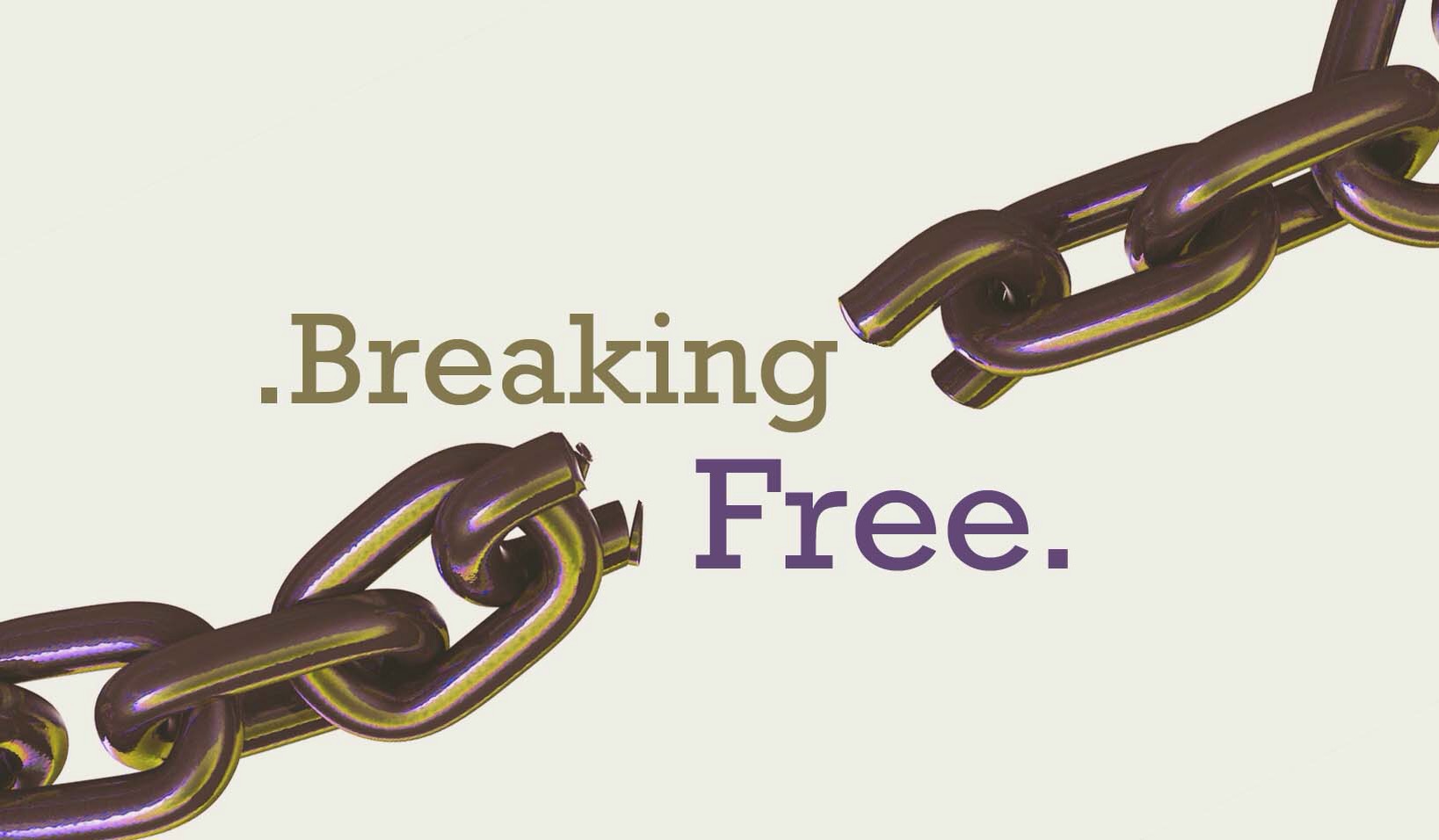
Both blame and grace are powerful forces. Blame chains us up. Grace instead unwraps the chains that blame and guilt wrap around us, breaking them, one by one.

This doesn’t mean the journey of grace is always easy. There is often pain in the humility and sacrifice it requires. This is because we have to let go of pride.

Pride refuses to accept we might be wrong. We use pride to protect ourselves from our own, and others, mistakes, insecurities and vulnerabilities.

Grace, on the other hand, often reveals our weakness, yet as we face them we also find healing. It loves us in our brokenness and allows that love to flow out, even to those we once blamed. 

Grace is the only way to freedom. 
 But what do we do when someone has mistreated us and will not take responsibility?

  • Does Grace mean that we don’t pursue justice? 
  • Does it blindly overlook mistreatment? 

No. 
Grace and justice co-exist and even compliment one another. 

It is all about the heart of the person pursuing justice:

  • What are their motives?
  • What do they wish to achieve? 

I personally faced a situation when I was in hospital, a few months ago, that Matt and I believed was a matter of justice and we pursued it on those grounds. I referred to it in my 6 month injury update. 

A senior doctor dealt with a situation very rudely, with no element of understanding of the desperation I was in at that time.

The next day, after he heard that we had made a verbal complaint to the Ward Sister, he tried to rectify the situation through intimidation, rather than any hint of understanding or remorse.

He would not accept that he could have dealt with things differently. Even though I attempted to explain that I would have done things differently myself, if I wasn’t feeling so acutely unwell, in pain and mentally impaired at the time.

Instead he persisted in blaming me, an unwell patient, for his behaviour and response. He would accept no responsibility, whatsoever, and felt completely justified.

At the time it was truly horrible. 

This person I was trusting with my care, at one of my weakest and most vulnerable moments, was choosing arrogance and self preservation rather than compassion, care and understanding.

In these times we have to look at the situation, look at our hearts and decide what we need to do. 

For Matt and I what happened was a justice situation and the behaviour needed to be challenged. Not just because of what was said to me but because of how this behaviour could be perpetuated to others even more vulnerable than I was.

It wasn’t about blame. It was about challenging the inappropriate behaviour of someone who had a duty of care and responsibility.

So we made a formal complaint. 

Even within that process, Matt had to challenge me about my attitude. That was hard, because I found the whole thing quite traumatic. But he was right because even amidst the complaint:

We still needed to guard our hearts.
We still needed to hold onto grace and forgiveness. 
Otherwise, we would continue to be wounded by it.

It takes a lot of wisdom to get the right balance between justice and grace. However, even when we feel the need to pursue justice we can still do that with a heart of grace rather than hate or blame.

Justice is at its most powerful when it is delivered in the context of grace. 

Parenting: Grace and Justice combined.
This combination is very evident in good parenting. If we overlooked all of our kid’s errors and misbehaviour, in the name of love and grace, and never gave any discipline, correction or consequences, they would never learn to take responsibility for their own actions.

They would probably grow up to be selfish and undisciplined adults. 

However, good parents understand that we must deliver this discipline and teach justice from a place of unconditional love and grace.

Then challenge and correction is about love rather than our need to pay back our children for their mistakes. We teach them that there is rightly consequences in the world, but we also teach them that we love them regardless of their behaviour.

That is true grace. 

Justice is about responsibility but we can pursue that without falling into blame. We don’t pursue justice to inflict pain on the other person, or to make us feel better. We instead pursue justice because it is right, protects others and because it gives us all room to change and grow.

Laying down our rights. 
There are times, however, when we may need to lay down our ‘right’ to justice so as to demonstrate grace. Those times take a lot of wisdom. Again it’s about what is going on in our hearts and the hearts of those who have caused pain or wronged us.

Grace is one of the most powerful acts of kindness that there is. It is one of the most generous of gifts, for it will often choose mercy over justice. It chooses to lay down our ‘rights’ to show love to another and to allow them freedom from the guilt that blame attempts to place upon them. 

Grace always has more chance of bringing resolution than blame. This is because as we accept responsibility for our own failures first, it makes a way for reconciliation. 

People can learn from their mistakes and grow together. It then has the potential to open the way for a stronger relationship, which can be built on the firm foundations of humility and trust.

Blame burns bridges.
Grace builds bridges. 

I know I would rather be known as a bridge builder than a bridge burner.

How about you? 

“When you blame others you give up the power to change.” – Douglas Adams

_________________________________________

  • Are there areas of your life where you have been made bitter by blame? 
  • Do these areas bring peace or stress in your life? 
  • Can you recognise things that you need to take responsibility for before challenging someone else’s behaviour? 

This post is part of my ‘Breaking Free!’ series of posts.

Learning Patience

Patience is not the ability to wait but the ability to keep a good attitude whilst waiting. – Joyce Meyer

There is nothing like hospitals to teach you the virtues of being patient.

I am writing this, in hospital, after a relapse. Neurologists think I have a recurring CSF leak which perhaps exacerbates post traumatic migrane symptoms from my original concussion.

When better to write a post on patience! 

Hospitals require patience.
Patients need hospitals
Learning to be a patient patient is hard.

Being unwell makes being patient so much harder. You go to hospital because you are unwell. Being unwell is unpleasant. Your ability to function normally is challenged. You just want to get fixed, get better and go home.

But often instead you have to: 
Wait
Wait
Wait
Then wait a bit more! 

For everything!

The wonderful medical staff are so busy with all the patients trying to be patient whilst ill. Which can’t be easy.

So everything takes a while. 

When my husband brought me to A&E, a couple of days ago, I was having one of my ‘drunk like’ episodes. Basically amidst all the head pressure, dizziness and general head & neck pain, my head also goes a bit funny and I act rather tipsy. (A symptom that has appeared occasionally when things have got bad. Which wasn’t helped by waiting sitting upright for so long – which is not helpful if you are leaking Cerebral Spinal Fluid).

All this meant I waited in the A&E assessment waiting room a bit like a small unwell child.

Speaking loudly,
Reading all the signs out loud,
And asking my husband every five mins:

When is it my go?”. 

I kid you not – that is literally how it was!

It’s both half amusing and half troubling for Matt and I (and probably exceedingly annoying for everyone who probably assumed I had vodka in the water bottle I constantly swigged).  

Why is waiting so hard? 

  • We are not used to it. 
  • It feels like a waste of time. 
  • It can make us feel anxious or frustrated. 
  • We want quick fixes and quick answers. 
  • We are too used to our fast paced world. 

However, 

Perhaps, if we realised there are lessons to be learned from waiting, we would embrace times of waiting more easily. Maybe then we would not allow ourselves to get so frazzled.

I am speaking to myself as much as anyone else as I write this. There is nothing like a lesson learned in real time, as I wrote in my last post Breaking Free! From Self Pity. And there is nothing like being ‘stuck’ in hospital to refine your waiting skills.

It’s a challenge to say the least. 

But we must try to find positives in hard times or we will become consumed by the difficulties. Being frustrated, annoyed and impatient usually does nothing to help the process and certainly doesn’t help get you better.

I do know how hard this is though, especially when you feel desperately ill. 

My first night after being admitted was tough. I wasn’t in the best way (although not ‘as bad’ once I actually got to lie down flat of course). I was on a medical ward because they firstly wanted to rule out a brain infection, such as meningitis, so I had lots of doctors coming to check me out.

During the night I somehow laid on the cannula they had put in my arm and pulled it out. Once I realised, and had called the nurse, I looked down and saw the bed and me covered in a pool of blood, from it leaking.

The nurse came, sorted out the cannula and started changing my bed and I got myself to the loo to try and change. (which was a challenge in itself because my walking and balance were affected by my general CSF leak/ post concussion heady symptoms). But in true Becky Hill style I was intent on doing it myself and thought I felt OK enough to manage.

How wrong I was! 

I started to try and clean myself up and during the process pretty much fainted, but seeing as I was by then half undressed and smeared in blood, whilst trying to wash the blood out of my clothes, I thought I would try again, not wanting the nurses to have to rescue me.

Unfortunately, that was wishful thinking and in almost passing out again, I managed to unlock the door and ring the emergency buzzer.

I was lying on that hospital toilet floor, feeling extreamly weak, desperately vulnerable and overwhelmingly nauseous. I then had to wait for someone to hear the buzzer and come.

I could hardly move, hardly talk and certainly couldn’t look after myself in that moment. 

But I still had to wait. 

It probably wasn’t even that long before the nurse came. But it felt like forever. Listening to that buzzer, hoping someone would come.

Trust me I know how hard it is to wait when you are desperate. 

It turned out my blood pressure was very low and the wonderful nurses put a lovely hospital gown round me and wheeled me back to bed, the doctors came and they had to give me IV fluids to help sort me out.

Waiting can be so hard, especially when we are feeling weak, vulnerable and desperate. 

It’s also hard to get waiting right in those moments. (Hopefully others can then empathise more with our impatience in those moments). 

In general though, we can all learn to wait more patiently in both easy and harder times. Here are some of the ways the process of waiting can help us.

1. Waiting teaches us how to be patient. 

Well that’s obvious, isn’t it? 

But it’s not always the case. Waiting is often enforced upon us and hence it is something we ALL complain and get frustrated about.

Who likes enforced waiting? It’s just down right annoying isn’t it? 

Yes it is! However, being patient brings peace and a lot less stress during difficult times. Stress just produces tension in our bodies and minds and usually just makes the whole ‘waiting’ experience more traumatic than it needs to be.

We may still need to challenge the process and find out if all the waiting is really necessary. But we can do that from a place of peace and understanding rather than anger and frustration.


2. Waiting can help our empathy of others’ difficulties. 

When I have to wait, especially in a hospital, it’s easy to start to look around and try to work out how important my case is compared to others.

If we are not careful the selfish tendency we all have kicks in and we are blinded by our own problems and cannot even begin to see the difficulties others face.

‘Me, me, what about me!’

Patience instead allows us to show more empathy to others around us and see the difficulties they face as well.

3. Waiting can be an opportunity to rest.

We are often not very good at resting when it also involves waiting. I know that I am certainly not! We complain about our busyness and then can’t cope with resting either.

This is because enforced rest is often neither convenient or welcomed – because we can’t choose it or use it how we want.

It feels like a colossal inconvenience and a waste of our precious time. Which may well be the case.

However, rest is a good thing when used correctly. Sometimes it is only thorough rest that complete healing comes. But only if we let go of our anxiety in the process and attempt to fill our thoughts with better things.

4. Waiting increase our endurance. 

“We can rejoice, too, when we run into problems and trials, for we know that they help us develop endurance. And endurance develops strength of character…” (Romans 5:3-4 The Bible)

Endurance is a great virtue. Without endurance we won’t get very far in life. It is endurance that spurs us to keep on keeping on, even when the going gets really tough.

It enables us to push through difficulties and come out stronger the other side. Without endurance we become floored by every trial, however small. We give up trying, aiming or working towards better things.

  
Learning how to ‘wait’ better can do a deep work in us that enables us to face the challenges life brings and overcome them as best we can.

Patience brings us peace amidst the storm because we stop allowing the storm to control our feelings and actions.

In this way, we not only ‘survive the storm’ but we can ‘thrive in the storm,’ because ultimately that which came and brought chaos in our lives, actually produces more peace, contentment and thankfulness.

Maybe if we see things differently we will no longer fight ‘waiting’ so much. Maybe we will instead find a way to embrace it, with wisdom, allowing it to do the work in us it can do;

If we will just let it. 

“Without patience, we will learn less in life. We will see less. We will feel less. We will hear less.” – Mother Teresa

_________________________________________________
Next time you have to wait. Have a look around you and perhaps ask yourself:

What can I learn, see, hear and feel from this process?  

How can I contribute to a peaceful atmosphere amidst the wait and even in challenging it? 


To read more about my journey since my concussion and CSF Leak please see my first post here.

To read more about my ongoing story of living with a chronic spinal CSF Leak click here.

Here is a brilliant 2 min animation about Spinal CSF leaks.

For more information about spinal CSF leaks please see the UK charity website at www.csfleak.info or the US charity website at www.spinalcsfleak.org.

Breaking Free! From Self Pity 

 “Self-pity is our worst enemy and if we yield to it, we can never do anything wise in this world.” – Helen Keller (1880 – 1968)

(Helen Keller, although both deaf and blind became an author, political activist and lecturer.)

Do you ever have moments when you look at your life, your problems, your struggles and before you know it you feel so rubbish that you can hardly find the energy for anything?

Days or moments when you can only see what is wrong and struggle to see what is right?

I certainly do.

However, 

I am learning not to let these moments control me or to linger in my thoughts for too long. 

I am learning how to break free of them more quickly. 

Some days it is more of a battle than others.

But I have to fight, because I know that self pity will destroy us if we let it. 

When we feel sorry for ourselves we become consumed by our own problems. We cannot break free from the “if only you knew how hard it is for ME,” mentality.

We become consumed with ourselves. 

I am currently writing this post whilst lying flat, as I talked about in Surviving the Storm Eight months on. I have had a challenging few weeks with recurring CSF Leak symptoms which mean I have to lie flat for hours during the day to control them.

Over the past 2/3 weeks I have not been able to stay upright for as long as I did a couple of months ago.

And it is frustrating! 

There is only so much you can do lying flat! 

People have been asking me… ‘How are you doing?’ and I can’t lie. Things are a challenge at the moment.

That is my reality. 

Sometimes they then respond saying ‘that must make you feel down’. Thankfully this is not the case, but some days I do have to fight those feelings. I have to work at keeping the right perspective.

This is why I am writing this post. 

It’s currently 10am and I have been lying down since 9:30am (only having been upright for 2 hours). As I lay down I felt a wave of self pity begin to prod at me. I felt the ‘poor me’ begin to knock at my thoughts.

But as I felt this, as it fought for my attention, pulling me to listen to its complaints.

I decided I had to get free from it. 

How did I do that?
Well I am doing it now.
I am writing this post. 

I am speaking back to those thoughts trying to take control and saying;

Self pity you will not take me down. I refuse to be your victim. I refuse to be anyone’s victim. 

So today I invite you on my journey of dealing with my self pity.

In real time. 

In the exact moment it is happening. 

This is not theory, it is a practical lesson in breaking free from something that can break us – if it’s allowed to.

I don’t always get it right. I still struggle with self pity and selfishness, as we all do, but I am learning ways to stop it in its tracks.

Here is what I have learnt.

1. Remain Thankful 
Being thankful is the number one weapon that we can use to fight self pity.

A thankful heart is not only the greatest virtue, but the parent of all the other virtues. ~Cicero

I thank God for all the good parts of my life, how much better I am than at the beginning of the year & how much I can do. (I can write this post, for instance which I couldn’t do at first). I am thankful it wasn’t and isn’t worse than it is and that I have a great family and support network.

Whether or not you believe in God we can always learn how to become more thankful for life and it’s blessings.

2. Think about other people more
We can only get the focus off ourselves if we move it elsewhere. If we allow our eyes to be opened to the problems and needs of others it soon puts our problems into perspective as I wrote about last week.

Our mountain shrinks in size and becomes more of a hill in light of what some people face.

I have read of many people with CSF leaks who are in a much worse place than me. Compared to others my story has not been so bad. 

3. Hold onto hope. 
When hope is gone we feel like we have nothing to live for.
This is why depression is so destructive, because it strips us of our hope and of our energy for life. (I am so thankful to have not reached this desperation myself, but I have stood along side enough people struggling with it to understand the damage it causes and how difficult it is to get free from). 

How can we rediscover hope in the midst of hopelessness?

We have to battle through all the darkness & negativity to find that one beam of light. To find those encouraging words and thoughts and hold onto them.

We have to keep pressing through and believing we can come out the other side.

There is always hope to be found if we will seek and find it.

4. Changing the what ifs 
We have to choose to do away with the negative ‘what if’s’ about the future and focus on the positive ‘what if’s’. This doesn’t mean pretending or avoiding reality. We cannot live in denial. It just means choosing to see more of the positives rather than being blinded and consumed by the negatives that we cannot change.

5. Optimism vs pessimism

“Optimism is the faith that leads to achievement. Nothing can be done without hope and confidence.” – Helen Keller”

We can all learn to think more optimistically. Even if we are a ‘glass half empty’ person – we can change.

I know from my own life, I have moved from a more pessimistic to a more optimistic outlook over the years and it partly comes through retraining the way I think.

We don’t have to stay the way we are, we can learn practical disciplines which help change our thought processes.

6. Feed yourself with encouraging thoughts and words and get around encouraging people. 
For instance when you feel self pity knock at your door, whatever you do don’t sit dwelling on those thoughts.

Be careful about listening to sad songs or watching sad films that perpetuate the negative feelings.
Instead, you need to be encouraged. You need to find people and things that uplift you.

I keep a store of great bible verses and quotes in my phone for this purpose. So I can always find words to counteract negative feelings when they come. I also then have words for others when they need them.

Be intentional.

Store up encouragement for that rainy day. I really do believe that a few simple words can change your outlook for the whole day.

Self pity is always lurking round the corner in our lives. It calls us to listen to its complaints and excuses. But ultimately, it only leads to despair and destruction in our own lives and relationships with others. It amplifies our selfishness and drags us into dark ways of thinking.

We all need to take care of ourselves. We need to be real about the challenges we face. We need to ask for help when we need it.

However, 

It is possible to face the reality in front of us without letting it consume us. We can say to ourselves, ‘yes this is hard, it’s painful, it’s a struggle… BUT!!!! … Despite it all I still have so much to be thankful for’

That is the way to freedom.

“Self-pity is our worst enemy and if we yield to it, we can never do anything wise in this world.” Helen Keller


What practical things do you do to deal with self pity? It would be great to share your ideas with others. Please do comment below. 

To read more about my ongoing story of living with a chronic spinal CSF Leak click here.

Here is a brilliant 2 min animation about Spinal CSF leaks.

For more information about spinal CSF leaks please see the UK charity website at www.csfleak.info or the US charity website at www.spinalcsfleak.org.

We Are All Messed Up!

Do you ever wonder:
If other people are like you?
What their ‘real’ lives are like?
Who are they really behind that mask or behind those closed doors?

Do others really struggle like you do?

Over the years I have learnt that people are more similar than we might think. Although our lives and challenges are, in many ways, unique.

We ALL have struggles.

Life brings all of us both joy and pain.

Even those people who might want you to think that they have it all together. The ones who seem like life always goes well for them – the beautiful couple down the road and the perfect family next door.

Yes; they struggle too.

Their challenges will be unique to them and you will often never know they exist.

But I assure you – they are there.

“Be kind, for everyone you meet is fighting a hard battle.” – Plato

from darkness

Over the years I have had the privilege to connect and build relationships with people from all different backgrounds and cultures, both here (in the UK) and abroad.

I love people. I love discovering who they really are and then helping them to reach out towards fulfilling their potential.

One of the things I have learnt is that although the world is full of diversity, which is wonderful, we are ALL actually more similar than we might think. Things are different outwardly for us all and yet inside we often face the same challenges, temptations and battles.

I recently watched an episode of a series called ‘The Tribe’ on Channel 4 about a native family living in rural Ethiopia.

It was fascinating.

Obviously their lives were completely different from ours. They lived in mud huts, kept animals, were self sufficient, had arranged marriages and yet as you watched it and listened to the translation you realised that families face a lot of the same issues.

Fear,
Worry,
Anger,
Insecurity,
Struggles,
Pain,
Rebellion (yes teenagers in rural Ethiopia like to push the boundaries of tradition and etiquette just like Western kids do).

In the episode I saw, one of the teenage girls used to love going to the market in the town to look at & buy new items of clothing. On this one occasion she ran off with some of her family’s money to go and buy colourful bras (even though the traditional dress was that women usually went topless). The argument that took place upon her return was so similar to arguments in many teen homes in the West!

We are ALL more similar than you might think.

FullSizeRender

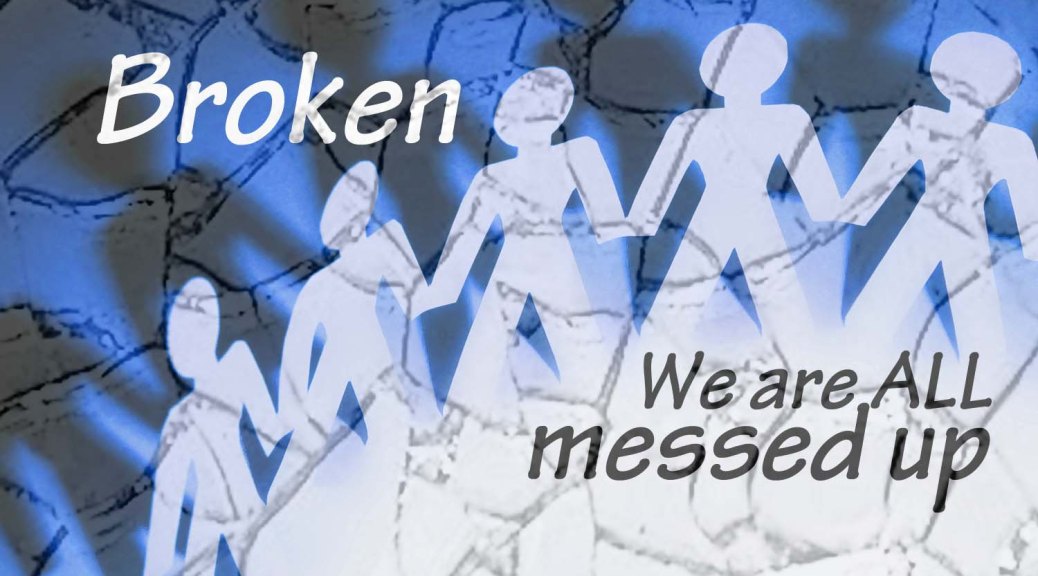
There is a song by Lecrae, featuring Kari Jobe that really spoke to me following its release a while ago. It is all about the fact that we are ALL broken, messed up and in need of grace.

“Broken pieces actin’ like we ain’t cracked,
But we all messed up and can’t no one escape that…
… Ain’t a soul on the planet
That’s better than another
And we all need grace in the face of each other” – Lecrae

I love this concept.

We are ALL messed up in some way and in need of grace (undeserved kindness, understanding and forgiveness).  

Grasping this stops us believing there is a hierarchy of ‘goodness’. That some of us are just ‘good people’ and some of us simply ‘bad’.

The revelation that people are more similar to you than you think, is actually empowering because it makes us all more equal. It demands that we treat one another with grace rather than judging one another with faulty or hypocritical principles.

When we can accept that we ALL have weakness, vulnerability and struggles; our selfishness is challenged and we can actually become more compassionate.

It changes our pride into humility.

We stop rating ourselves as better or worse than others but instead recognise that we are all ‘messed up’, in some way, and in need of grace.

It levels the playing field.

As I wrote in Surviving the Storm Six months on, I have been faced with my own frailty and weaknesses this year, possibly far more than any other year.

This year has challenged my identity and chipped away at my confidence. Physical weakness can also challenge us mentally and emotionally.

You have less energy for life.

However,

I am learning that I need to embrace this process rather than fight it.

We must allow our own struggles to build in us authenticity and a deeper compassion and grace for others.

It’s a painful process.
It’s a humbling process.
But it’s also a beautiful process if we let it run its course.

In A Year Ago Today: A Journey Through Grief (about my Mum’s death) I wrote:

“Suffering can, if we let it, unite and draw us together in a way that nothing else can. It strips us of our titles and crafted exteriors and touches the heart.”

Suffering causes different things to happen to different people: Some people can become hard and bitter, consumed by their own pain and need. Others learn to direct their pain into compassion and empathy for others.

It is these people that find new purpose within their suffering. They have other people to think about and focus on which helps to heal their own wounds.

It changes our perspective.

Self pity; destroys us. It makes us miserable and angry.
Compassion; fills us with positive passion. It moves us to see others needs and make a difference in their lives.

Feeling compassion, for others, in the midst of our own struggles, brokenness and pain, builds bridges that helps us to identify with all sorts of other people.

from darkness

We are ALL messed up in some way.
We ALL have flaws.
We ALL get stuff wrong.
We ALL make mistakes.

Most of the time we will never know what has happened in someone’s life to make them like they are.

We ALL have a story;
Things that shape us.
Things that break us.
Things that heal us.
Things that strengthen us.

We are ALL more similar than we think and; “We all need grace in the face of each other.”

“It’s incredibly powerful- life changing- to be in a relationship where we can be totally vulnerable without fear, when the person knows the worst about us and still accepts us.” -Samuel Chand

Who could you show grace and compassion to today?

Surviving the Storm Eight Months On: My Battle with Concussion & A CSF Leak

A day.
A moment.
An accident.
8 months ago.
When things went wrong for a season.

A fall.
A brain injury.
An undiagnosed spinal injury.
Months of craziness.

This is my update.

It’s for those who know me and it’s for those who don’t. I know some of you are finding these blog posts by searching online.

I want to tell you my story. In the hope that it helps you. Perhaps your own story involves injury and illness, brain or spinal injury. Or maybe it involves another type of storm.

We all face stormy seasons in our lives.

Life is a journey of discovery. We are constantly learning about ourselves and what is around us.

Self awareness is an important part of our growth. My husband and I are on a constant journey to understand life better: Why do we do what we do and feel what we feel? What is our purpose in life and how do we live it out?

We then hope what we learn might help others too.

The journey of self awareness is a humbling journey and yet it is a healthy journey. It helps us to process and break free from thoughts and behaviour that seek to control us.

The past 8 months have been one of the most intense personal journeys of growth I have experienced. As I wrote in Surviving the Storm Six Months On, I have come face to face with many of my weaknesses. Which has been hard and painful, but also a journey of discovering new strength.

wolken

So 8 months on.
Where am I now?

I would love to say that everything is fine. That I have made a full recovery and we can leave it all behind us.

But that is not the truth.

At this moment, I am writing this post lying flat, which still forms a significant part of my day. I was up at 6am, as it was the kids first day back at school. I rushed about getting them ready, dropping them off, shopping, sorting, cleaning etc. Then by about 10am I recognised that I needed a bit of ‘down time’ to ward off symptoms and to pace myself through the day.

If you have read my previous posts, know about CSF leaks or have spoken to me about it, you will know that the postural side of the injury is a key part of it.

Basically when you have a CSF leak, your spinal fluid leaks either from your skull or from the part of your spine that holds the spinal fluid.

We never located my leak on the various scans I had, but we assumed mine was probably a spinal leak. This means the spinal fluid leaks into your body from a tiny hole or tear in the membrane that surrounds your spinal cord.

This results in ‘brain sag’. The brain lacks the support of the spinal fluid and so drops in your skull when you are upright (either sitting or standing).

This causes various problems. The most reported symptoms are severe headaches and neck pain as everything gets squashed and stretched inside. But there are a multitude of other symptoms.

One of the key ones for me at first was severe dizziness and major balance issues (I could hardly walk without support for almost 3 months). This is so much better but still manifests as a spaced out/ cloudy feeling quite a bit.

I was diagnosed with a CSF leak about 8/9 weeks after my initial fall off a ladder (following an initial post concussion diagnosis). After finally being admitted to hospital with various symptoms, about 18 days lying flat in a neurology ward, having 3 MRI scans, which were inconclusive, and a lumbar puncture, which showed low pressure spinal fluid – I had a blind epidural blood patch. (They take blood from your arm and inject it into the epidural space in your spine, in the hope that the clotting helps to heal the leak and increase the spinal fluid pressure. Mine was a high volume blind blood patch, because they couldn’t find the leak on MRI scans, which is not unusual. If they know where the leak is then patches are often more successful).

All this treatment had a significant positive impact and, as I wrote in my first Surviving the Storm post, it brought a sense of normality back to my life. I could spend much more time upright. I was able to do most things and thankfully could drive again (although I stick to short journeys at present because my head can still cloud over at times).

Since then there has been a general gradual improvement.

However,

I am still not back to where I was pre-injury and that is a challenge. I have days that are better and days that are more difficult. But the persistent symptoms are still a daily battle.

I have had to develop new routines that involve regular ‘lying down flat’ breaks. Often these are around lunch time and in the evening, although it varies a lot as I try and preempt what I need to do and lie down before and/or after going out.

I tend to find evenings harder generally. So on busier days I often spend a lot of the evening lying flat (either in bed or on the sofa – as long as my head is pretty flat). Less busy or less symptomatic days it is not as necessary.

I feel extremely blessed that in general the pain scale is nothing like it was around the time I was admitted to hospital. Back then it regularly reached 8 or even 10 out of 10 (comparable to having a baby ladies).

These days thankfully the pain is not as severe and takes longer to build up.

It is nothing like any headaches I had ever experienced pre-injury.

It’s more of an intensity, a pressure that builds up in the lower back of my head and in the top of my neck, leaving my neck feeling really stiff and painful and my head full and cloudy.

When I do lie down often that same feeling often drops to the bottom of my spine around where I had the blood patch.

Similar sensation; different place.

One way I explain it to others is it’s like having a really bad head cold and your head is so full of pressure that it’s hard to think and do things. If it’s a particularly bad one I also can feel it behind my sinuses which makes the sensation more head cold like.

This feeling varies in intensity throughout the day. Often, first thing, I feel fine. It then builds up to varying levels depending on what I am doing and how much lying down I have done.

As it builds up, things get harder. I might take some paracetamol or ibuprofen which helps a bit. Caffeine is also proven to help, so I usually get dosed up on that in the mornings.

As it gets worse I tend to go quieter as everything gets harder, both mentally and physically. The pressure, pain and stiffness builds, which is often coupled by a spaced out feeling and still sometimes a bit of photophobia.

Most of the time I will look fine outwardly. But if you see me when it gets really bad you might pick up on a spaced out, distracted, stressed or pained look on my face.

I often try and keep going for a while when I get like this, until I reach a point where it gets so bad I can’t think straight, the pressure and pain builds and I know I need to rest and lie down. I also try and preempt it and lie down before it gets too bad.

When I lie down there is an element of instant relief. I often say to my husband before I lie down I sometimes just feel like I want to go to sleep; you just feel wiped out. But soon after lying down I can think straight again, my head gets clearer and the pressure eases.

(This was often the way it was at the start, following my injury. I found I could have decent conversations with people if I was lying down. But I didn’t last very long and often couldn’t think straight for very long sitting or especially standing or walking).

The current physical symptoms vary in their intensity on different days, depending on how busy or strenuous the day is and even what time of the month it is (yes ladies it gets worse then!)

During the recent summer holidays things generally seemed better. I felt I had more energy and perhaps needed to lie down a bit less. It helped that I could take it easy in the mornings, lie in bed for longer and add in breaks where necessary.

This summer we have done a lot of clearing out and sorting thorough stuff, which I wrote about in my last post. That kind of work is quite physically demanding so I would rest more at the start of the day and then by the end of a day I usually had to lie down more.

It’s all about managing your time and energy reserves. I also spend time praying and getting encouraged with great words from the bible and other quotes. This helps keep my thoughts together and focus on good things through the tougher and more frustrating days.

wolken
Storms come.
Life goes on.
We cannot wallow in the challenges or they will swallow us up.

I have been getting better and I want to hold onto that and keep believing for complete healing and freedom from this storm soon.

The storm has calmed but it has not yet fully passed. You learn to live with it to an extent and yet I also choose to believe it will fully heal in time.

My faith encourages me to not live life defeated or deflated. Hope always drives us forward. Even though it can be a humbling process balancing belief and reality.

I am deeply grateful for all the health and healing already attained and the sense of normality it brings.

Most of all I am thankful for the good that my experience will bring. There are always positives to be found, even in hard times. Even the darkest times can be used for good.

Whatever your unique storm:
Never let go of hope.
Never stop believing.
Never stop seeing the good, even when it’s painful.

Perspective is vital.

There is always something to be thankful for.
There are always others worse off than you.
We all suffer and feel pain in one way or another.

As a popular saying goes:

“Life is not about waiting for the storm to pass; it’s about learning to dance in the rain.”

I have decided that I will always find the ways and means to dance through life, even in the midst of the rain.

It’s not always easy, but it is the only way to live and thrive through both the ups and the downs of life. It is the only way to find the strength to survive the storm when it hits.

This is my story of a unique season in my life. A storm that has come, that is passing but is taking its time to fully leave.

I don’t know what storms you face? An injury, illness, relationship breakdown or bereavement? Perhaps your prognosis is much worse than mine? Maybe your storm is hidden from view?

But there is a way forward:

We can learn how to dance in the rain.
It is the only way to thrive in the midst of the storm.


I would love to hear about your stories and experiences. Please do leave a comment below or on my social media links.

You can read the first post about my injury here and my six month update here. I usually write my blog posts on my iPhone during my ‘lying flat’ times. Initially following my injury I could not even look at a phone or computer screen for more than a few minutes without feeling exceptionally ill. I am very grateful to be able to do this now.

To read more about my ongoing story of living with a chronic spinal CSF Leak click here.

Here is a brilliant 2 min animation about Spinal CSF leaks.

For more information about spinal CSF leaks please see the UK charity website at www.csfleak.info or the US charity website at www.spinalcsfleak.org.

This is a wonderful new May 2018 medical paper about the 10 most common myths and misperceptions about spinal CSF leaks. It is by some of the top world experts in treating this condition. I was told so many of these myths by various neurologists, anaesthetists, radiologists and many other doctors during my lengthy and traumatic nearly 5 year battle with a spinal CSF leak. This kind of misinformation caused many delays, misunderstanding and great distress on my already immensely long winded and difficult medical journey.

This other in depth 2018 medical paper is about both low and high intracranial pressure syndromes and their similar and different symptoms. It also mentions cross overs with other headache types. When a patient suffers with a spinal CSF leak long term it can cause massive fluctuations in their whole pressure system both whilst suffering from a spinal CSF leak and following treatment. This is why lumbar puncture pressure readings and ICP pressure monitoring can prove an inaccurate disgnostic tool for SIH as this paper refers to as does the 10 myths paper. My initial LP reading was a 7 which was considered ‘evidence’ of low pressure by some doctors and normal by others.


The Art of Simplicity: The Big Clear Out

“Simplicity is the ultimate sophistication.” Leonardo da Vinci

Every year during the summer holidays I embark on a big clear out at home. In fact, I think many people choose the summer school holidays to sort through their ‘stuff’ and get rid of things.

I find it such a satisfying process! Although it is often both exhausting and frustrating when you are in the midst of it.

I got into the habit of regularly simplifying and clearing out, a number of years ago, when my children were small. For a few reasons we ended up moving house about 4 times in 6 years.

Moving house is a chaotic time but it can also demand much discipline. We had to decide what things we should actually move. Most of the moves we did ourselves and when you have to move stuff yourselves you choose to think more carefully about what you really want to keep.

Each time we moved we would have things stored in attics or cupboards that we had not touched in a couple of years of living in a new house. When you find you have not opened a box in that long, you soon realise that you probably don’t need it after all.

Going through this same process four times taught me the discipline of simplifying and decluttering. Which is something I have continued to put into practice, even though we have finally stayed in one house for 6 years.

The Big Clear Out copy

This summer we have been particularly ruthless.

My children are finally learning from ‘clearing out’ with me over the years, that simplicity often makes life easier. They hate tidying their rooms, but are learning the less things you have and the more organised they are, the easier it is to look after them.

We got rid of bags and bags of clutter, rubbish, junk and passed on decent items no longer wanted or outgrown.

Life is easier when you declutter and simplify. It takes time and discipline but it is worth it.

How many times have you lost something amidst the clutter of your home only to rediscover it when you finally get round to clearing out?

Simplicity can provide space for the new. When your life is too full of the old, there is no room left for the new.

We should certainly celebrate the old, hold onto memories and enjoy traditions. But we must find a balance of old and new that creates space in our life.

In the West we love to accumulate ‘things’
… And more things…
….And more things!

In the hope that it will make life better and happier.

And yet ‘things’ can also complicate our lives.

We instead need to discover a balance that works in our life. Reassessing what we actually need and what is just taking up precious space and time.


When your life is too full of the old, there is no room left for the new.


I have learnt that taking the time to consistently organise, sort through and make space, enables us to embrace change more easily and move forward into the future without having to drag too much of the past around with us.

“Resistance to change is universal. It invades all classes and cultures.”- John Maxwell

The Art of Simplicity copy

The practical discipline of ‘clearing out’ and decluttering is metaphorical of a similar process in our wider lives.

I often choose the start of the new year or the end of a school year to clear out and prepare for the new season ahead.

This summer held more significance for my elder daughter because she is moving on from primary school to High School.

Clearing things out and sorting through them can prepare you mentally as you look through old memorabilia, selectively choose which to hold onto and then make space for the new things you will inevitably acquire (especially when you have children around).

We have to choose what things hold real significance and sentimental value and what we perhaps need to ‘let go’ of because it is simply cluttering up our lives.


Taking the time to consistently organise, sort through and make space, enables us to embrace change more easily.


The wider life discipline of simplifying asks the same question:

What is cluttering up my life?
What do I need to cut back on to make room for the new?
How can I prepare myself for the season ahead?

Our physical reality is often symbolic of other things going on in our life. Physical actions can help us prepare for, face and work through mental and emotional change.

Decluttering and re-organising helps us to:
Celebrate yesterday.
Focus on today.
and
Make space for tomorrow.

I found the process of starting to help my Dad clear his house following my Mums death quite a therapeutic exercise. Of course you want to hold onto many memories and items of significance, but there is also something healthy in saying goodbye, letting go and recognising a new season ahead.

It is not always an easy process, and can take time to face, but is one that can be useful in so many different ways and can help us mentally accept and adapt to change whether it is happily welcomed or tragically enforced.

Time invested today to embrace the process of simplifying is not wasted time. It is preparation for the future. So that we can move forward and welcome change without too much baggage tied around our ankles.

There is a freedom that comes through LETTING GO.

“That’s been one of my mantras – focus and simplicity. Simple can be harder than complex: You have to work hard to get your thinking clean to make it simple.” – Steve Jobs


How could you make more space, room and time in your life?
Is it time for a big clear out?

Thoughtless words can wound as deeply as any sword

WORDS are sometimes easy to say.
Sometimes they are hard.
They can be too many.
Or too few.
They have the power to WOUND.
And the power to HEAL.

How do you use your words?

Each of us have different strengths and weaknesses when it comes to words.

We can be GOOD with them.
Communicate well.
Inspire, encourage and build others up.

Or we can be BAD with them.
Communicate badly.
Say the wrong thing at the wrong time and hurt people.

Communication isn’t always easy or simple. We ALL get it wrong at times, both intentionally and unintentionally. We can say too much or we can say too little.

It is not always easy to get right and even when we think we have, we can find that someone heard it all wrong anyway.

We know that good communication builds strong relationships and bad communication can tear them apart. But it isn’t always simple to navigate and it certainly takes a lot of wisdom.

Words can sometimes fly too freely from our mouths. It is not until later on that we might realise we didn’t think long or hard enough beforehand about how we communicated them. We gave too little thought to their consequences.

An old proverb says:

Thoughtless words can WOUND as deeply as any sword, but wisely spoken words can heal. (‭Proverbs‬ ‭12‬:‭18.‬ The Bible)

Can you relate to that Proverb?

I know I can.

WORDS copy

I can remember one time during my first or second year at secondary school (age 11/12). I had a friend that I would sit next to in my tutor group. We used to spend quite a bit of time together in and out of school. Then one day another friend told me that on that morning, as I came down the path towards the classroom, someone said “Becky is coming” and this girl had apparently responded, “Oh no, she is so annoying, I can’t believe I have to sit next to her.”

Someone I thought was my friend didn’t like to be with me.

Those words hurt.

They attack your confidence and your trust.

Our words matter.
They are not easily forgotten and cannot be taken back.
Badly spoken words can wreck relationships and hurt others.

We cannot change what we have said in the past. We also cannot change what others have said to or about us. But we can choose to use own our words differently, both today and in the future.

We can turn the tide and use more thoughtful and wise words to HEAL others.

Thoughtless words can wound as deeply as any sword, but wisely spoken words can HEAL. (‭Proverbs‬ ‭12‬:‭18‬. The Bible)

I have been thinking about how wise and thoughtful words can heal and how can we use them more. Here are some of my conclusions.

WORDS scripture copy

KIND WORDS BUILD PEOPLE UP
Using kind words can have more impact than you can imagine. In the same way that we remember words that hurt us. We can also remember significant kind words, especially when they are given during a difficult times.

I can remember times when a short message on a card or a text has meant a lot and held much significance.

Kind words can be short and easy to speak, but their echoes are truly endless. – Mother Teresa

ENCOURAGEMENT COUNTERACTS CRITICISM
We all face negativity and criticism. It seems all too easy for us and others to complain, moan and point out all the faults in what others do. In a world that can often hear a lot more negatives than positives we desperately need people who choose to encourage. Who are thankful and appreciative of others. Who choose to see what is right rather than just what is wrong.

“Encouragement is the oxygen of the soul.” -John Maxwell

BELIEF RESTORES HOPE
Expressing your belief in someone can restore their hope and vision for the future. People find it all too easy to pull one another apart but the words ‘I believe in you and what you are doing’ can be life changing and counteract discouragement and disappointment.

“Worry weighs a person down; an encouraging word cheers a person up.” -The Bible: (Proverbs‬ ‭12‬:‭25‬)

KIND WORDS ARE GENEROUS
We often think about generosity in terms of money or gifts. But we can also be generous with our words. Offering someone a kind word, compliment or encouragement can be a form of generosity because it puts that person first and shows that you are thinking about them. It takes time, effort and humility to reach out to someone with kindness.

One of the best gifts you can anyone is encouragement. If everyone received enough the world would blossom beyond our wildest dreams. – Nicky Gumbel

WRITTEN WORDS CAN BE HELD ON TO
When someone writes thoughtful words down for you, you can re-read them, hold onto them and treasure them. I am sure many of us hold onto particular cards and letters with messages that really spoke to us at that time.

These can be invaluable during difficult times in our lives. They remind us that someone, somewhere does care.

USING KIND WORDS BLESSES US TOO
When we give a gift of kind words to others we find that we get blessed too. Good communication builds strong relationships with others. It encourages others to use similar words back. It helps us to feel good in sharing them. We get the focus off ourselves and think about how we can help another and that always helps us to feel better too.


The Proverb is so true. Thoughtless words DO wound deeply, but thoughtful, wisely spoken words DO heal.

Good words not only build others up but they can also heal the wounds inflicted by other thoughtless words. That is why our words are so powerful. They really can change lives.

Would you rather be a person who wounds or one that heals?

I know who I would rather be!

Be generous with your time and your resources and with giving credit and, especially, with your words. It’s so much easier to be a critic than a celebrator. Always remember there is a human being on the other end of every exchange. – Maria Popova

How do you think words can heal? Do you have any examples from your life?