Yesterday was a hard day. A day where the horrible constant pain and nausea nagged and taunted me the whole day. A day where grief again came as waves that wouldn’t stop washing over me.
Reminders of loss, of restriction, of the shackles of chronic illness.
Grief doesn’t just come when people die. (Although that is one of the worst kinds.) Grief comes wherever there is loss in our lives of things that were important to us.
There is often a lot of things lost with chronic illness.
Grief brings an anxiety that attacks you. An inner pain that can take your breath away. A deep sense of loss and forced change. A feeling of being somewhat out of control. Not knowing what the future will look like. Unsure that you will always find the strength you need to hold on.
The grief is real–yet unwelcome.
Grief is the uninvited visitor who barges into your life, to brutally remind you of everything that has gone. You don’t want it there – you fight, resist it and want to chase those thoughts and feelings away.
Sometimes you can: You find a way to refocus. To remember all the good things still left to enjoy. But some days the battle rages: You spend all day exhaustingly trying to dodge and jump wave after wave…
Until in one moment – it catches you unawares – and crashes over you again. You want to scream, cry and shout out all your pain. All the heartache. The weariness of the constant battles. You want the world to know that you don’t want to be like this. You don’t want to live like this. This is not how it was meant to be. You don’t have the energy to keep facing these levels of pain and suffering.
But there is absolutely nothing you can do but try to flow with it. To try and wade through the turbulent waves. In the fight to find that deeper peace again.
Sometimes you just have to grieve. Sometimes you have to allow yourself to lament as David did in the Bible Psalms. Sometimes you must take a moment to face the reality of the struggle. To say how much it all hurts. To acknowledge how unfair it feels.
To speak the REALITY, that these days you perhaps rarely share.
I honestly get so tired sometimes of the relentless battles I have no choice but to fight.
“Confessing weakness is the doorway to hope. It marks the end of self-reliance and the beginning of letting grace do in you what you could never do for yourself.”
Grief is such a painful word. It’s even more of a painful feeling. It takes you over from the pit of your stomach. As you remember how things used to be. How you hoped they would remain. The person you thought you were and would be. The life you always had in mind.
Which no longer exists… Like it did before.
A significant part of my life died five years ago. My health was shattered after one fall. I have honestly forgotten what good health feels like. I don’t remember how it feels to have a body and brain that works normally. To not have this constant pressure and pain in my head and spine. It’s constant screaming for my attention. Pulling me to distraction.
I want to be present… Here with you in this moment… With others. Focusing fully on the things I need to do. Focusing fully on this time with you. But this illness, the never-ending pain keeps pulling at me. Taunting me. Shouting at me. Demanding my attention. Trying to take over my thoughts. The relentless noise in the background of everything I do.
Sometimes I just need to speak it out. To get it outside of my own mind.
To tell you how it feels. To let someone else struggling know that I go through it all too.
And in this moment I feel it with you. You are not alone. I am present with you in this distressing place. I am here with you in…
But that is not enough is it? To acknowledge such a terrible thing and then to leave it there with no hope. With no way forward. Because that place is too hard to stay long term. That place leads to darker and more deadly places where despair takes hold until all life is squeezed out from you.
We can’t deny it. But we must find a way through it.
Otherwise we might drown.
“Occasionally weep deeply over the life you hoped would be. Grieve the losses. Then wash your face. Trust God. And embrace the life you have.”
John Piper
Some days the battle is harder. Some days it is a little easier.
But when those horrible waves of grief do come, I am learning to let them BE for a moment. To acknowledge them – to voice them.Denial never helps – it only builds then bursts you open one day to levels that are unbearable. So I must learn the patient endurance again as today I attempt to rest as much as I can, and wait for the waves to still a little more. Returning to a more steady place I can again find the strength again;
To re-frame. To refocus. To SEE with new eyes the beauty that is still here.
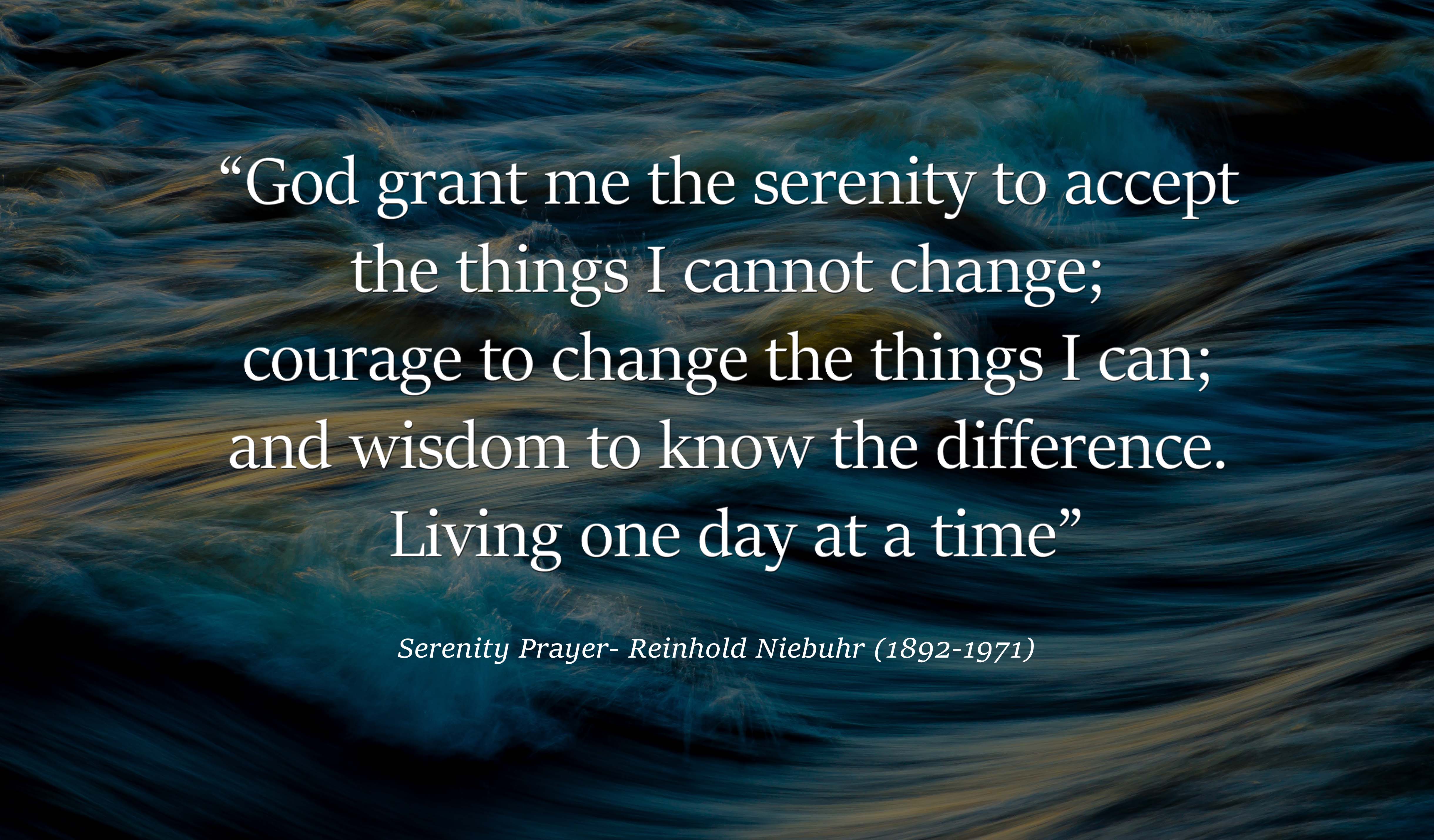
It’s in the facing and accepting of grief that we find a new way forward. A journey of many wrestlings where we MUST learn how to accept the things we cannot change, whilst having the wisdom and courage to change the things we can.
Neither living in denial nor getting pulled into the pit of despair.
Gratitude helps that. To see, remember and focus on all the wonder still around me. My loving husband, family, a beautiful home, food on the table, amazing friends. The opportunity to write, to see others, to encourage and teach different people through church, to make a small difference in someone else’s life. To remember all the things I can do amidst all the restrictions…
… To continue to love and to be loved.
To see beyond my own pain and allow it to produce a deeper sensitivity to others pain –physical, mental and emotional. To know that learning how to deal with my own personal battles – gives me new wisdom to help others deal with theirs. The goal that in overcoming each day – I can help someone else overcome too. To stay and fight to see the wonder still around us, the hope that can still be found.
I have to again remember that my life has purpose and meaning within all its restrictions and despite its debilitation.
This is not always as easy as it sounds. The theory is good, the practice can be so hard. Because when grief comes – it not only reminds you of what is lost, it also tries to steal everything you have left. It can paralyse you as it attacks your confidence, your peace, your mental stability, your ability to know you still have purpose and worth.
“Suffering is never abstract, theoretical, or impersonal. Suffering is real, tangible, personal, and specific.”
But we have to both accept it – whilst also finding a way through it. We know we can’t stay here. Without it pulling us into dark places that are full of despair.
We have to choose to wrestle our way back into brighter places. Where we can see and be thankful for what we do have. Where hope for the future can return – despite what that actually looks like. A place where we can again see that our life matters, it has purpose and can lead to new adventures, to new places.
However, to embrace the new we must first let go of the old.
That is why we grieve.
It’s in the letting go.
It’s in the feelings of loss.
But it’s also in the letting go that we discover more freedom. In accepting what has now gone – we become more open to discovering a different way of life that is still worth living. It may not look how we imagined it. It will probably still be full of a multitude of challenges. It doesn’t mean the pain will all go.
But as we again let go of the reigns, as we stop trying to stay in control. End trying to compare our lives to an idealistic fantasy that doesn’t actually exist. Whilst we learn to accept that life can be full of things that seem to go wrong. We can also learn to ‘let go’ and discover a glorious deeper surrender in the here and now. Surrendering to a new way, a new plan and new purpose that is ordered by One who is greater than we are – if we will seek Him. A way forward in hope – even in midst of the brokenness of our world and our fragile humanity.
A way that is full of love and life. Despite the pain and restrictions.
But to embrace the new we must grieve and lay down the old. Otherwise we will never see the beauty in this season. We will never witness new birth coming from dead things. The new shoots of spring, of new life, coming from the death and desolation of the winter.
So sometimes we just have to let the waves of grief come. I have to simply allow them to break over me. And even though sometimes I may rawly feel their brutality. I hope that I can keep holding on through them to discover the beautiful horizons, that although perhaps currently hidden, still remain to be explored and discovered on their other side.
“I know it’s all you’ve got to just be strong. And it’s a fight just to keep it together, together. I know you think, that you are too far gone. But hope is never lost. Hope is never lost. Hold on, don’t let go. Just take, one step, closer. Put one foot in front of the other. You’ll, get through this. Just follow the light in the darkness.”
To read more about my 5 year journey with a spinal csf leak please click on the SPINAL CSF LEAK heading above or read this post: Living with a Spinal CSF Leak.
“Time is not really spent. Instead, it is invested in a future we cannot see.” – Alicia Britt Chloe
When I read this quote recently in Alicia’s book ‘Anonymous’ it resonated with my perspective on life. Our time on this earth should not simply be ‘spent’ and should certainly not be ‘wasted’. Instead, all of our time is an investment for a future we cannot yet see – whether it’s intentional ‘learning or doing’, time invested in family and relationships, or facing a set of circumstances which force us to use our time in a new or unforeseen way.
If we can see like this, then we can know that nothing needs to be wasted. Everywhere our life takes us – both the good and bad – is an opportunity to learn, grow and invest into who we are becoming. It’s also an investment into who those we parent, lead and influence are becoming.
All life’s circumstances are opportunities to invest in the future – whether it’s ours, or others around us.
The pathway of recovery, after a long term spinal fluid leak, is often a long, arduous and immensely slow process – even after more successful treatment.
The wonderful news is that – a year on from my seemingly successful 4th blind lumbar (40ml) epidural blood patch (EBP) – I am doing comparatively well. I have been upright all day every day since mid December 2017 (some days recently that is from 4am – 11pm!! If I happen to wake up early and have to get up due to ‘lying down’ headaches).
I can walk for miles, happily drive locally, get a lot done at home and look after my children (now 11 & 13). I can cook & bake for our family and others, spend quality time with people, go on holiday, and invest increasing time in my life-calling of pastoring and helping hurting people, in and through our local church. This is currently mainly through a lot of one-to-one mentoring and personal development time with others, as well as teaching in small group settings. I also do bits of admin for our church. Thankfully this is all flexible and I can do what I can, when I can, without any added pressures.
I have so very much to be abundantly grateful for. Last year I was acutely unwell and utterly debilitated – initially by the spinal fluid leak, then subsequently by severe post-treatment rebound high pressure symptoms. For four months over the summer of 2017 I had to lie down flat nearly all day, every day, and could only manage an exhausting 10-30mins upright at a time. Then after my EBP I just had a pretty much constant debilitating non-positional headache – amidst many other symptoms (as I talk about in this post) – for months. It is hard to explain how extremely unwell you are with both those conditions, and how confusing it is to work out which is which after treatment.
They are both truly awful to endure!
The road to full healing, even after successful treatment, is not an easy one at all. After a while, you can see that you are making some progress – albeit slow – in moving up the mountainside from the darkness of the valley below. But even the mountain climb of recovery is utterly exhausting in so many ways. It continues to take so much endurance, patience and resilience to scale the never ending rocky slopes.
But I am getting there….
In the light of how ill I was for so long – I am doing exceedingly well! I haven’t been this well since my accident in January 2015. In the light of how healthy and busy I was before my accident – and the onset of the leak – I am still not fully well. But I’m increasingly heading in the right direction.
How ‘well’ I am now is all a matter of perspective. I have to keep focusing on the wonder of how far I have come and the fact that I can easily be upright all day, which is a small miracle to me. So I must embrace all I can do – which is comparatively a lot – and not resent or get frustrated with what I can’t!
The slowness of my recovery can certainly feel frustrating at times – to say the least. Who doesn’t want to get back to full health and be able to embrace more of the life they once knew? And yet I’ve begun to learn and see more of the wisdom that can be found in the slowness. It’s not just my body that needs to heal physically – I (and my whole family) have needed to heal holistically, in so many different areas.
Having lived with a chronic debilitating neurological illness for years, and then experiencing the slow process of holistic recovery, I believe in some ways the whole journey through illness, healing and recovery can be viewed in a similar way to grief. It’s a journey, a passage, we walk through. It’s not something we experience one day, then ‘get over’ it the next. It lives with us as we attempt to move forward with our life. We have to wholeheartedly face, embrace, and walk through what we discover on the journey of sickness and healing – whether traumatic, painful or beautiful. We must give it the time and attention needed to move ‘through’ it, as well as we can, and find more lasting healing in every way.
My mind, emotions, memories, and soul need healing just as much as my physical body. They have needed to find increasing restoration, fresh confidence and new freedom.
You can’t ‘rush’ holistic healing!
It’s a process of working through complex and traumatic memories, emotions and thoughts. Unless you’ve walked the spinal CSF leak road, or a similar long term debilitating illness, you may not understand the trauma involved at every stage. Simply the daily holistic trauma of living with the illness itself is enough. When ‘leaking’, simply being ‘upright’ is often utterly traumatic for our bodies, brains and minds. Then add in the trauma of trying to seek medical help and support for a condition that very few doctors really understand (IF you can get diagnosed and ‘believed’ – that is). And add to that the mental and emotional trauma of being so debilitated and unable to function, anything like normally, in the short and long term. With this combination you can see that there is a lot to work through – as I write about in one of my most widely read posts, Living With a Spinal CSF Leak.
Sometimes it’s not until you start getting well that you actually realise how exceedingly unwell you truly were for so long. This is traumatic in its own way. The fear of going back there again can be overwhelmingly crippling – especially in light of how long recovery takes. This isn’t helped when, like in my own case, multiple major relapses have been your very real past experience. Moving on from the fear of relapsing again is so very difficult. True freedom from this fear can only come slowly, as your confidence builds with the longer you go without getting worse again. These fears can also leave us completely confused and unsure of what we should allow our body to do or not do.
On a purely physical level, I have also discovered that, after years of leaking spinal fluid from your spine, your whole nervous, and intracranial pressure, system seems to be completely messed up!! Over the months and years of leaking I have become hypersensitive to even the smallest pressure changes in my head and spine. These physical ailments added immensely to the struggle to cope with even small amounts of stress and anxiety whilst leaking and during recovery. This is due to stress and anxiety naturally affecting intracranial pressure anyway, meaning that the physical, mental and emotional become even more intrinsically linked. Even more so because any heightened emotion, especially crying and laughing (or raising your voice in excitement, passion or anger), are brutal on our already hypersensitive heads.
I found the only way to try and deal with all this was by learning to stay as calm, peaceful and quiet as possible. (I already experienced this from leaking – as can be read in this article). This means we have to avoid stressful and anxiety inducing situations when we can – whilst ‘leaking’ and especially in the early months of recovery – which is not easy when we are trying to holistically manage and recover from a debilitating illness, still have to deal with medical professionals and hospitals, and have a family and home to look after (at the very least). It would be even harder if I had had to try and go back to any of a massive spectrum of jobs and careers which do not allow an abundance of time for calm and quiet individual activity. I cannot ‘multi-task’ anything like I used to be able to. Such things are still often way too overwhelming for my current cognitive capacity – although still obviously improving. Even now I also still struggle to ‘rush about’, especially in ‘busy’ or ‘bustling’ environments (even more so if I have to talk to and interact with others as well) so I have to try and maintain more order and calm throughout my life than most people.
Initially, even simply doing more ‘normal’ things again – like going to shops or being in an environment with lots of people – can induce anxiety. As it would for anyone recovering from a long term, previously debilitating, medical (especially a neurological condition). However, this then perpetuates itself because we are already so hypersensitive and thus prone to such things. These environments are already ‘taxing’ on our ‘foggy’ heads because of all the overload of mental stimulation. But having to interact with people and talk a lot can also soon leave our heads even more full of pressure and thus struggling to concentrate and cognitively process what is happening and how we need to respond. So we have to be careful about how much we subject our heads to.
This unfortunately meant I often found myself ‘avoiding people’ at times – especially for the first few months of recovery. This was truly heartbreaking for me because I really do love people and like to talk to them about their lives. But talking, for even short periods of time, would simply make my head worse. Although this has very much improved overtime, my head getting worse from simply talking can still regularly be an issue.
The other key problem with our recovery is that to improve our physical conditioning we have to exercise. But exercise involves exertion, which is another trigger for the higher pressure hypersensitivity. So again it’s a vicious cycle. After the first awful couple of months post-treatment when I still couldn’t walk far at all, I subsequently found that gentle, and initially slow, walking often helped my head more than trying to rest lying down or reclined. Since early December ‘17, I decided to keep my body upright all day and quickly increased the amount I walked up to an average of 3-5 miles a day over 2-4 separate walks. The walks started off very slowly – but my pace slowly increased as my head and spine improved. Long walks – alone – also gave me, and still give me, the much needed space to calm and relax my body and mind, as well as improve any anxiety and my general conditioning. Walking is also very liberating after the many months over the past few years I couldn’t really leave the house.
I did discover that walking was much easier on my head if I walked quietly (or normally listening to something uplifting, inspiring and calming on my smartphone) on my own. Due to the increased breath use – walking and talking at the same time are more of a challenge. I can walk much further more easily on my own than with others. Similarly, I can also get more done at home when I am not required to talk at the same time. Moving about a lot and talking (especially more loudly) can be a bad combination for my head. Although this slowly gets better over time.
Other ongoing physical symptoms include varying head pressure often felt mostly in the lower forehead and especially around and behind the eyes when worse. (When particularly bad it can feel like your eyes might burst out of your head). But I can also feel pressure in the occipital region (bottom of skull/ top of spine) and down the spine (especially in the lower lumbar spine). But it’s a slightly different sensation to ‘low pressure’ (leaking) occipital/ neck ‘pulling’ headache. Although harder to differentiate in the early days of recovery.
The main difference that slowly becomes clearer (after much initial confusion) with this ‘higher pressure’ type of pain is – rather than increasingly getting worse throughout the day (or even over a short period of time being upright) – like it did when obviously leaking, it tends to instead come and go at various points in the day according to what is setting off the ‘hypersensitivity’ at that time. Even now, it can still get worse until my head feels full, my ears crackle and pop and sometimes it makes me yawn a lot and feel rather sleepy – especially due to the pressure behind and around the eyes. It can also make me feel slightly shaky, rather detached from the real world, my vision can get slightly blurry, my cognitive processing gets a bit more sluggish, I can occasionally feel a bit nauseous (in the early weeks after my EBP it could often make me physically gag) and my heart can beat noticeably faster. Hence adding to an ‘anxious’ feeling. But this normally gets better again if I spend some time staying upright but being quiet, calm, keeping my spine straighter and move about more gently and slowly. If it gets too bad – often a quiet walk or sitting quietly for a bit helps.
The other main difference to ‘low pressure headaches’ is that it doesn’t get better lying down– although lying down may still rest your body somewhat – hence the confusion. I never lie down in the day anymore because it tends to make my head worse. However, all of these kind of reactions mentioned above are slowly getting less acute or intense and much more manageable as recovery improves.
Waking up in the mornings can also still be problematic at times because of the lying down. I still often (most days) have increasing headaches around and behind my eyes and in my lower forehead, and can sometimes feel slightly nauseous soon after I wake up (this is especially prominent if I try and stay in bed too long once awake). Unlike when ‘leaking’ – I subsequently find that I must get up once I have been awake a little while – whatever time it is. I am known to get up anytime from between 3:30am-8:30am depending on the day and when I happen to wake up (unless the 6:30am alarm on school days wakes me first). Once I do get up the main headache goes away quite quickly these days – although my head and spine can remain feeling strangely ‘full’ but without obvious pain. (In the initial weeks after my blood patch, the headache wouldn’t always ease much getting up – at least at first. I think the exertion of getting up and interacting/ talking with my family would complicate it and I could often feel very unwell and often feel sick and gag from trying to ‘do things’. So then I would then try and lie down again to be still and quiet – but would end up still feeling very ill and then simply continue to physically gag from the nausea and increasing pain from lying down (which simply adds to the exertion headache – perpetuating everything). It’s tormentingly confusing and very hard to get relief in any position in the early days of recovery. Medication (initally acatezolomide, then after 2 months a switch to nortriptyline, in my case) can help some of the underlying problem or pain. But not necessarily the hypersensitive reactions to changes in intracranial pressure. Which is why it is so utterly confusing and brutal on your mental health – which adds to the anxiety we are already prone to – as I write about here in my 6 month post patch update).
Bending my neck down to read, whilst walking or to look at things (like my smartphone), or bending my spine to do things – tends to also obviously increase the pressure in my head and make my ears feel full and pop. As does carrying moderately heavy things. So I am still super careful and gentle with movements involving my spine. I just can’t be sure that it’s OK to lift and bend much still, so I still self-impose many post-EBP style restrictions and tend to always kneel first to pick things up off the floor, unload the dishwasher or put washing in, or take it out, of the machine. Over time I have gently allowed my spine to bend and lift a bit more – but only very carefully and cautiously.
During my years of leaking and my experiences of rebound high pressure (post treatment) I always found sitting down would tend to increase the pressure in my head/ spine or increase my leak symptoms when leaking. So I used to stand a lot more when upright. This has improved so much and I can sit for longer and longer, but it is often still harder for me to sit (relaxed) for longer periods of time (the sofa can be the worst place due to the softness of the seat). I actually find I am better sitting with my back very straight and legs bent directly in front, with the soles of my feet touching the floor. Slouching, leaning back too far or putting my feet up is no good, at all, for my head or spine.
I know the sitting issues have also been aggravated too by the general ongoing tension up my spine. I personally hypothesise that much of this is probably down to the higher pressure/ higher volume of spinal fluid pushing against my nerve roots. But it’s obviously also linked to the years of pain and physical tension in my head and spine and also the lack of natural movement. It’s hard to know how to combat this much whilst still restricting movement. It improves little by little and lots of walking and the general rehabilitation of doing things around the house and going shopping (limiting how much is carried) etc helps it a lot, thankfully. But I have found that this can’t really be overcome by trying to ‘force it better’. Gentle movement and gentle lifting, whilst remaining very patient with regards to ongoing ‘pressure issues’ is so important. I just have to listen to my body and head. Trying to ‘push myself’ and rush this process of less pain and tension in my head and down my spine can just lead to relapse and in hindsight has probably contributed to my own before.
(In hindsight, I now think that I experienced rebound high pressure symptoms at least after my second (11 months post leak onset)and third blood patches (15 months in – when I was also treated with acetazolomide) but I always got worse again many weeks to months later. I do not know if I was also still leaking a bit too after any of my patches (apart from a bit after the first perhaps) or what exactly brought on the consistent obvious major relapses. (Apart from when I fell over again badly in May 2017). I always got much better after blind lumbar high volume EBP and could spend much more time upright – often all day – over the following weeks and months – but was never symptom free. But it’s all FAR too confusing to say for sure and the confusion only gets harder the longer you have been leaking. Medical professionals in the UK normally do not understand these medical conditions enough to support you well either. Which makes living through it immensely hard and another challenging battle to fight, whilst you are utterly exhausted and acutely hypersensitive to stress and anxiety anyway. This all contributed to a major crisis in my own mental health (see Breaking Through the Darkness), including acute suicidal ideation, 2 months after my second EBP. This almost reoccurred again 2 months after the 4th patch that sealed me, as I try to describe in my 6 month post patch update).
However, regardless of all the immense and overwhelming challenges of living with a ‘leak’ for so long and now enduring the slow recovery process…
There is still so much from the past few years to treasure!
So it’s that which I want to focus on to finish…
Beauty can become even more beautiful once you have tasted of deep pain and debilitation – a theme that I wrote about in ‘Suffering into a Deeper Spiritual Awakening’. I have certainly learnt more about what truly matters in life. I see and notice beauty even more clearly around me – throughout creation and in other people. My heart is so much more tender and compassionate. I truly FEEL others pain much more deeply than I used to. My understanding of other people’s struggles is so much more profound.
If I could go back and had the choice to have or not have the leak – of course in so many ways I wish we had never had to walk through such an awfully traumatic and exhausting season in life.
And yet…
I would never want give up the beautiful lessons learnt or the wonderful people met. I could not deny the privilege of experiencing the depth of the valley of darkness – whilst actually being able to rise and recover again, as I hopefully increasingly move up towards more heights of better health. It has changed and increased the capacity of my heart in ways that I cannot even begin to fully explain. It has stretched my limited perspective and expanded my horizons. It has changed how I see and relate to others and deepened my love – for God and all people.
So with hindsight would I choose to personally go through such a desolate season of pain and suffering – because of what can be learnt and gained?
If I could have known, in advance, what the never-ending, deeply dark, valley entailed, I could not have chosen that road for myself or my family. Nor would I choose for anyone else to go through it either. Which is why I continue to raise awareness about the realities of living with the condition. In the hope that others will not have to suffer as deeply and as long as I have.
But… I would choose the new heights of beauty discovered in and from the depths of pain. Because they have transformed me for the better. They have brought holistic growth and resilience in ways I could never have achieved without going through such a raw deep struggle. I have also been able to connect and help others going through the same hell that I had to.
I have honestly been utterly shattered and broken by the past few years – in so many different ways.
And yet…
To be ‘broken and shattered’ is not always a bad thing long term. It strips you back, shows you what is truly important and gives you a new perspective on life and love. We can then hopefully one day, perhaps one day, become even more stable, loving, humble, understanding and holistically healthy people in the end. Until we can truly see that the years of pain become an investment for a better future – all round – that we previously could not see.
So for all those still suffering immensely with these awful conditions. I honestly feel the depths of your never-ending pain with you – but please take heart!And do not give up hope! Last year I wasn’t sure I could or would ever be well. I wasn’t sure that I had the strength left to make it through another day of fighting on so many different levels. I had again reached the absolute end of myself. But my journey shows that we really do not know what tomorrow might bring. That is why I have wanted to tell you my own story. In the hope that we will keep holding on and hoping for a better future – we cannot yet see – together.
“Only if you have been in the deepest valley, can you ever know how magnificent it is to be on the highest mountain.”– Richard M. Nixon
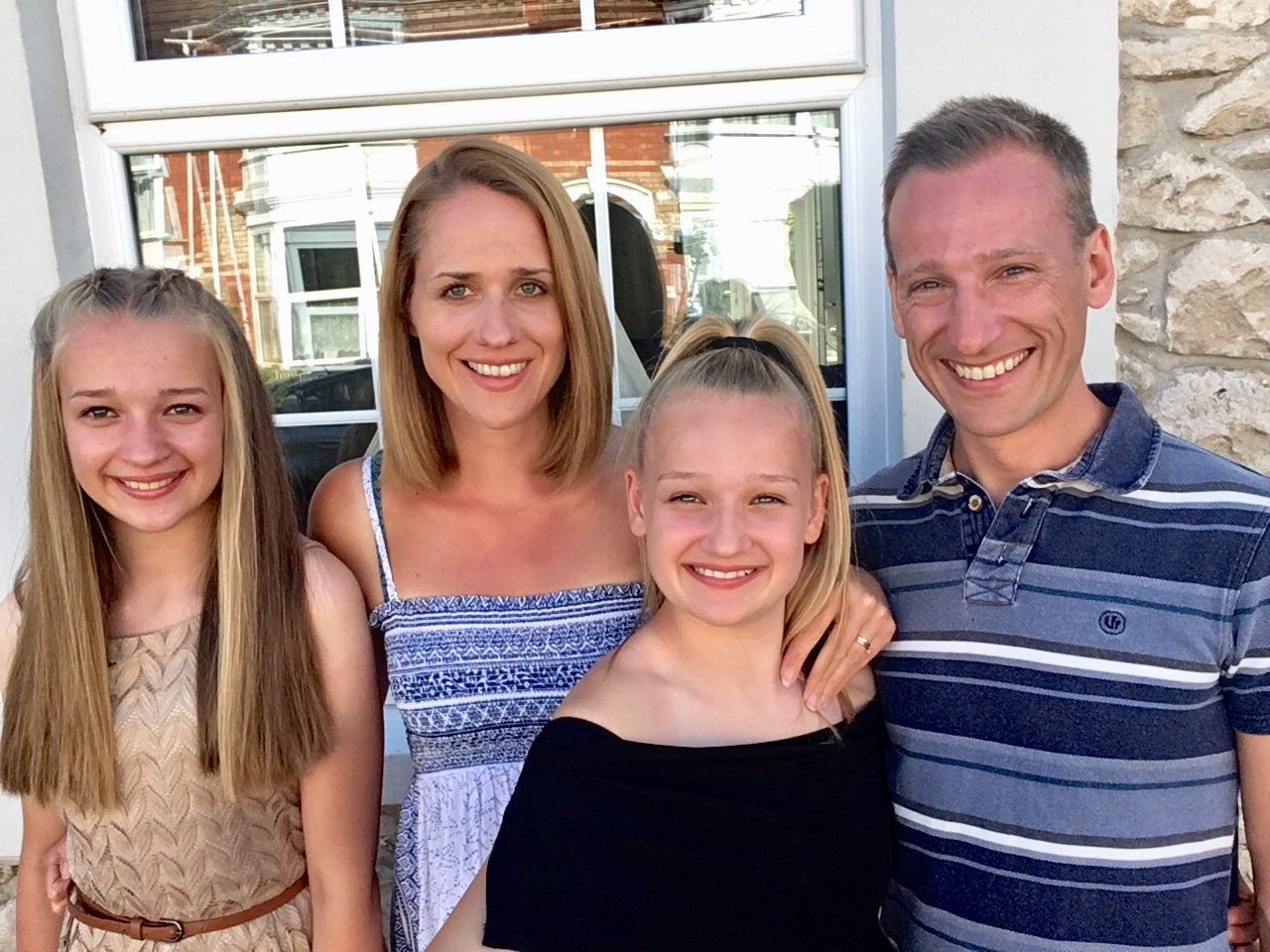
Our family on a beautiful and very blessed holiday (fully upright!!!) in Weymouth, UK, July 2018! (Which we had to cancel in 2017 due to a complete relapse of my chronic spinal CSF Leak). Our children Aimee and Beth were 7 & 10 when this nightmare began and our lives completely changed, they are now 11 & 13.
Please do comment or ask any questions below. Or alternatively you can email me at beckyhillblog@outlook.com
Here is a medical journal publication about rebound intracranial hypertension (rebound high pressure) as a complication of epidural blood patching.
Please see this new May 2018 medical paper about the 10 most common myths and misperceptions about spinal CSF leaks. It is by some of the top world experts in treating this condition. I was told so many of these myths by various neurologists, anaesthetists, radiologists and many other doctors during my lengthy and traumatic nearly 3 year battle with a spinal CSF leak. This kind of misinformation caused many delays, misunderstandings and great distress on my already immensely long winded and difficult medical journey.
This other in depth 2018 medical paper is about both low and high intracranial pressure syndromes and their similar and different symptoms. It also mentions cross overs with other headache types. When a patient suffers with a spinal CSF leak long term it can cause massive fluctuations in their whole pressure system both whilst suffering from a spinal CSF leak and following treatment. This is why lumbar puncture pressure readings and ICP pressure monitoring can prove an inaccurate diagnostic tool for SIH (low pressure) and RIH (rebound high pressure) as this paper refers to as does the 10 myths paper. My initial LP in February 2015 reading was a 7 which was considered ‘evidence’ of low pressure by some doctors and normal by others.
Writing to explore what life is about. Amidst its captivating beauty and deepest pain. In the hope that we can learn, grow and be inspired together.







 Becky Hill's Blog